
Highlights
- An adventurous journey in the Annapurna Himalayas in Nepal
- Complete one of the most famous circuit treks, the Annapurna Circuit
- Explore around the tenth-highest mountain in the world, Mt. Annapurna
- Make lifetime memories in a very short time
- Explore the exotic flora and fauna of the Annapurna Conservation Area
- Ascend and descend through different climatic zones
- Night stays in beautiful mountain villages and warm hospitality of the locals
- Witness many stunning mountains and diverse scenery
- Go on a side hike to Ice Lake, the hidden gem of the Annapurna region
- Cross the Thorong La Pass, the highest mountain pass in Nepal
- Get blessings at Muktinath Temple, a place where locals visit to get liberation
- Drive through the Kali Gandaki Gorge, the deepest gorge in the world
- Explore Kathmandu and Pokhara, two major tourist cities in Nepal
Overview
The Annapurna Circuit trek is an adventurous journey that is fueled by passion, determination, willpower, and discipline. It is one of the most iconic treks in Nepal, offering a complete Himalayan experience.
The Annapurna Circuit trek was introduced in 1977, and it instantly became a dream trekking program for adventure enthusiasts around the world. On the Annapurna Circuit trek, you not only explore the beautiful Himalayan valleys and witness stunning mountain vistas but also challenge yourself.
It is fascinating to see how humans set themselves up for challenges willingly. It is said that you grow in the face of challenge, and the Annapurna Circuit trek pushes you beyond your limits. On this 13-day adventure, you will travel from Kathmandu to Jagat and trek across Mt. Annapurna.
The Annapurna Circuit trek circles Mt. Annapurna. It is the tenth-highest mountain in the world. Trekking through beautiful Gurung and Magar villages, you will explore the Marsygandi Valley.
The trail gradually ascends from Marysnagdi Valley to Jarsang Khola Valley and enters the Lower Mustang region by crossing the Thorong La Pass. In the first few days of the journey, you will see greenery all around you.
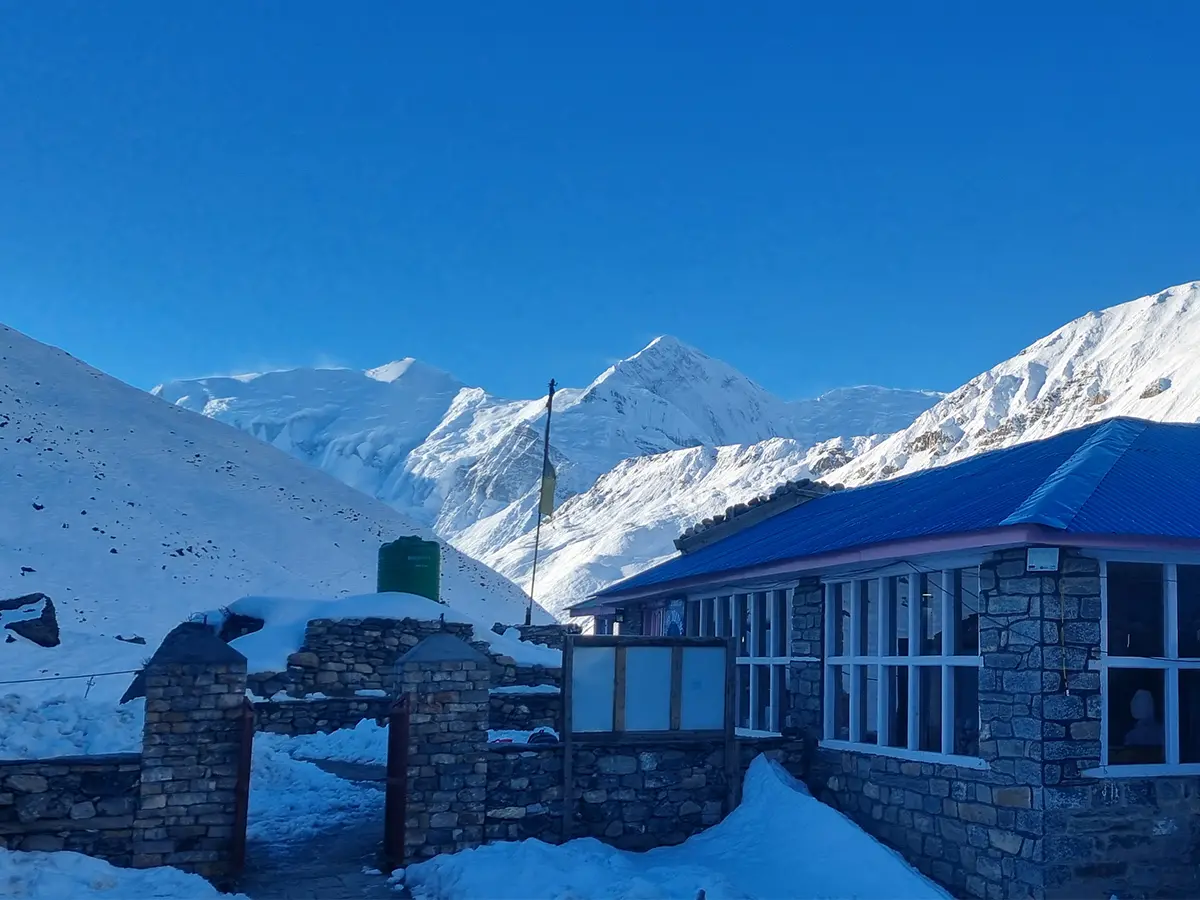
Slowly, the landscape turns barren and rocky with giant mountains looming all around you. Upon reaching the top of Thorong La, you will be rewarded with one of the most spectacular views of the entire trip.
Then, the trail descends to Muktinath Temple, a pilgrimage area. The Annapurna Circuit trek ends here, and you will drive to Pokhara. It will be a thrilling drive along rocky hillsides. Pokhara will welcome you with peace and bustling local markets.
After spending a night in Pokhara, you will return to Kathmandu. This marks the end of the trip. Our team will drop you off at the international airport the following day and bid you our last goodbye.
What to expect during the Annapurna Circuit trek 13 days?
There are many little things to look forward to during the Annapurna Circuit trek that are often overlooked. These things shape the journey and make it memorable.
6 hours of walking each day:
You will walk 6 hours a day during the Annapurna Circuit trek. Your day will begin early at around 7 AM. You will spend 1-2 hours freshening up and having breakfast. We aim to leave for the next village by 9:00 AM or 10:00 AM.
Steady but continuous uphill and downhill hiking:
From Jagat to Thorong La Pass, you will ascend all the way. It will be a steady uphill walk. There will be many downhill hikes as well enroute. It is important that trekkers maintain their pace and ascend slowly.
Night stays in Nepali mountain villages:
You do not reach Thorong La Pass in one day. You will hike for multiple days, taking night breaks in villages along the route.
This way, you can acclimatize and cross the Thorong La Pass without suffering from altitude sickness. The villages on the Annapurna Circuit are beautiful. Some offer better services than others.
Extra fees for services like hot showers, charging, and WiFi:
Hot showers, charging, and WiFi cost extra money in the teahouses. These services are not covered in our Annapurna Circuit trek package cost.
So, trekkers have to carry some money to pay for these services. Likewise, also carry backup such as wet wipes, spare batteries, and a power bank.
Drastic change in elevation and climate with the progress of the trek:
Every day, you will gain around 500 meters. This change in elevation brings climatic change. Trekking from lush valleys, you will ascend to the arid alpine zone.
The change in elevation and climate conditions demands that trekkers be adaptable and prepared for all kinds of temperatures.
Simple organic meals:
One of the less talked-about things about the Annapurna Circuit trek is the food. The food options in the mountains are limited due to the inaccessibility of the region.
It also means you will mostly have local dishes. Warm noodle soups, rice, potatoes, veggies, and eggs will be your daily meals. All dishes will be freshly cooked with locally sourced ingredients.
Interactions with locals and fellow trekkers:
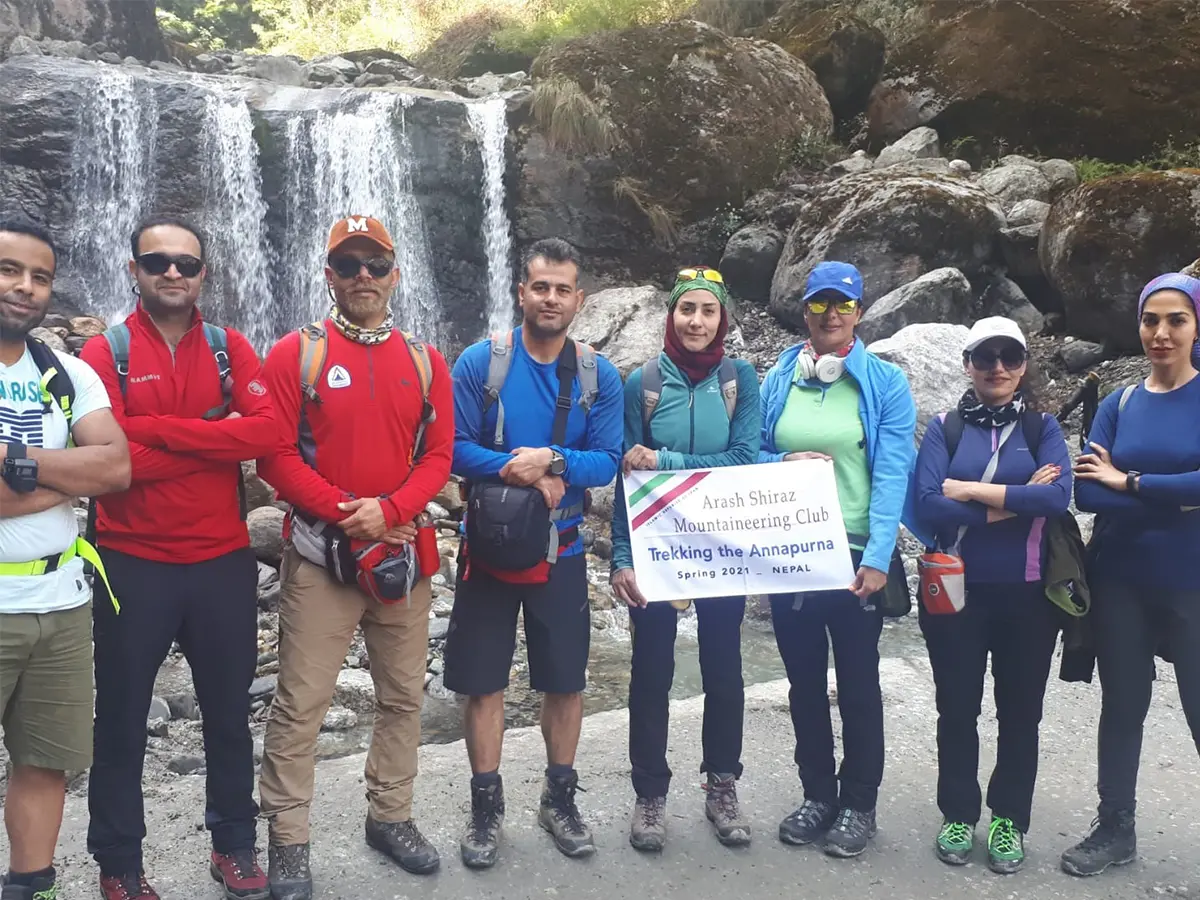
You can see many other trekkers on the Annapurna Circuit in the spring and autumn seasons. There is a sense of companionship in the air. Strangers feel like your friend.
Everyone smiles at you and says hello. You can make new friends. It is a very unique feeling. Similarly, the locals are also friendly and always looking forward to chatting with the foreigners.
An adventurous but challenging journey:
The Annapurna Circuit is a remote trek. You navigate different types of terrain and elevations. Trek through dense forested hills, narrow cliff sides, and landslide-prone areas.
There are many suspension and wooden bridges on the trails. The journey will test your fitness and push you beyond your limits. You have to be careful while trekking.
Major attractions of the Annapurna Circuit trek
Below, we have listed the top major attractions of the Annapurna Circuit trek in Nepal:
- Short but memorable time in Kathmandu: Complete this incredible trek in 13 days. The memories you will make in these 13 days are unbelievable.
- Diverse flora and fauna of Annapurna Conservation Area: The trail is spread over different climatic zones, allowing trekkers to see the diverse vegetation, flowers, and birds along the way.
- Beautiful villages and welcoming locals: The Annapurna Circuit trek route is dotted with beautiful villages such as Dharapani, Chame, Pisang, Manang, and Yak Kharka. Spending nights in these villages allows you to see the locals' lifestyle and their culture.
- Witness many different mountains in the western Himalayan range in Nepal: Throughout the Annapurna Circuit trek, you will see many mountains that include the Annapurna range, Dhaulagiri, Nilgiri, Manaslu, Fishtail, Hiunchuli, Pisang Peak, Tilicho Peak, Gangapurna, etc.
- Huge variety of landscapes: The Annapurna Circuit trek is famous for its varying landscapes. You will see lush green hills, rivers, waterfalls, streams, meadows, rocky peaks, barren valleys, glaciers, snow-capped mountains, and many types of vegetation.
- Side hike to Ice Lake (from Manang village): Ice Lake is the hidden gem of the Annapurna region. Situated at 4,620 meters above Manang village, a hike to Ice Lake helps you acclimate and offers stunning mountain vistas.
- Cross the Thorong La Pass: Thorong La Pass is the highest pass in Nepal, located at 5,416 meters. It connects the Annapurna region with the Mustang region. Crossing the pass is the main challenge of the Annapurna Circuit trek.
- Explore an ancient pilgrimage site, Muktinath Temple: Muktinath Temple is a pilgrimage site in Nepal. It is situated at 3,760 meters above sea level and dedicated to lord Vishnu. Hindus and Buddhists both visit this temple. For Buddhists, the Muktinath temple is home to their deity Avalokiteśvara.
- Drive through the Kali Gandaki Gorge on the way to Pokhara: The trek ends in Muktinath. From here, you will drive to Pokhara. On the way, you will drive through the Kali Gandaki Gorge, which is known as the deepest gorge in the world. Once, this gorge was a trade route between India, Nepal, and Tibet.
- Spend a night in Pokhara: The finale of the journey will be in Pokhara, the city of lakes. Pokhara is the most loved city by tourists. You can see the Fishtail and Annapurna from the city. You will explore Phewa Lake and the bustling Lakeside Market.
You might be curious about
Road construction on the Annapurna Circuit:
You might have heard or read about new roads going up the Marysangdi and Kali Gandaki valleys. What does it mean for the Annapurna Circuit trek? Well, the newly built roads have made the Annapurna Circuit more accessible.
Once, the Annapurna Circuit trek took 18 to 22 days on average to complete. Now, you can complete this trek in under two weeks. The new roads have not made any difference to the Annapurna Circuit trek experience.
In fact, you can choose to do a short Annapurna Circuit trek like this one or follow the classic old itinerary that includes places like Jomsom, Marpha, Tatoapani, Ghorepani, and Ghandruk.
There is no motor road between Manang and Muktinath. And the roads before and after these places don't make much of a difference. Views are still there, the locals are the same, and the adventure remains intact.
Clockwise or anti-clockwise Annapurna Circuit route?
Annapurna Circuit trek is done in an anti-clockwise direction (east to west). You will start the journey from the Marysgangdi Valley and gradually ascend to Thorong La Pass. This way, you will get ample time to acclimatize and avoid altitude sickness or any potential injuries while crossing the pass.
The clockwise route (west to east) begins from the Muktinath Temple at 3,750 meters. You will directly ascend from Muktinath to Thorong La Pass.
There are a few teahouses at Charabu (4,210 meters), but spending a night here doesn't do much for acclimatization, as you are already at a very high altitude in just the first two days of the trip.
Likewise, crossing the Thorong La Pass in a clockwise direction is also very demanding and risky. You must be very fit, sharp, and excellent at navigating mountainous terrain. In short, the Annapurna Circuit trek is not commonly done in a clockwise direction.
Extend the trek to Tilicho Lake
Tilicho Lake is one of the highest and most stunning lakes in Nepal. The lake is located at 4,919 meters above sea level. The Tilicho Lake route separates after Manang village.
Instead of trekking to Yak Kharka, you will hike to Khangsar, followed by Tilicho Base Camp and Tilicho Lake. Many trekkers combine the Tilicho Lake excursion in their Annapurna Circuit trek.
*Note that the Tilicho Lake route is challenging.
Alternative circuit treks in Nepal
The Annapurna Circuit trek sees a good number of trekkers every year. So, the trail is quite bustling during the peak trekking seasons. These are some other circuit trek options that are less crowded and even more remote and adventurous:
- Manaslu Circuit trek
- Kanchenjunga Circuit trek
- Everest Three Passes trek
Annapurna Circuit trek distance, duration, and altitude
The Annapurna Circuit trek distance is around 100 kilometers, following our 13-day itinerary. Depending on your Annapurna Circuit trek itinerary, the distance may vary.
Each day, you will walk 6 hours on average, gaining around 500 meters until Thorong La Pass. The trek starts from Jagat village at 1,340 meters and ascends to Thorong La Pass, 5,416 meters above sea level.
Between Jagat and Thorong La, you will spend seven days trekking. After Thorong La, the trail descends to Muktinath (3,760 m), where you will end the trek and drive to Pokhara (822 m).
Are you ready for the Annapurna Circuit trek?
The Annapurna Circuit trek is not an easy trek and is definitely not for beginner trekkers. It is an advanced trek in Nepal. Previous high altitude experience is required for the Annapurna Circuit trek along with good fitness.
Do you think you possess the required fitness, knowledge, and expertise for the Annapurna Circuit trek? If not, start with small treks or day hikes and build your strength and stamina.
We suggest you book the Annapurna Circuit trek early and start physical training for the journey.
- Daily walking: The ability to walk for long hours is the foundation of any trek in the Himalayas. Even the beginner friendly treks require 5 to 6 hours of hiking each day. So, you need to be able to walk at least 5 to 6 hours a day.
- Cardio: Cardio activities such as swimming, cycling, and running are great to improve your endurance and stamina. You have to push yourself a lot while on the Annapurna Circuit trek. That's why you need good stamina and endurance.
- Strength: Strength is another aspect that we cannot overlook. Long hikes at high altitude are only possible if your core is strong. You need strong legs, back, and core. So, strength training is recommended too.
- Day hikes or short treks: Day hikes/short treks are great to get a high altitude and uphill hiking experience. You do not necessarily need to come to Nepal for this. Find hiking trails around you and do a few hikes.
Annapurna Circuit trek cost and booking 2026
The Annapurna Circuit trek cost starts at USD XXXX. We also have group discounts available for the Annapurna Circuit trek. Trekkers can also customize the Annapurna Circuit trek as per their fitness, budget, and interests.
Our early bookings are open for Annapurna Circuit trek 2026 departures. The next peak season is around the corner, so it is the best time to book your seat and start preparing for the trek.
If you have any questions about the Annapurna Circuit trek price or need assistance in booking the trip, feel free to talk to us.
Why do the Annapurna Circuit trek with Mountain Life Treks?
Mountain Life Treks is a reliable trekking company led by the people of the mountains in Nepal. We are an experienced and trustworthy travel agency. We organize different kinds of treks, tours, climbing, and other adventurous trips all over Nepal.
By doing the Annapurna Circuit trek with us, you will get the following benefits:
- An expert local team that will handle all aspects of the journey for you
- Safety assurance
- 100% guaranteed departure
- Win-win cancellation policy
- An experienced guide and friendly porter
- 24/7 support and flexible Annapurna Circuit trek itinerary
- Fair pricing and no hidden fees
- Excellent trek service
- Free luggage storage in Kathmandu
- Complimentary airport pick up and drop off (as per the itinerary)
- Free duffel bag to use during the trek
- Responsible travel