Everest Base Camp Trek

2 Reviews in TripAdvisor

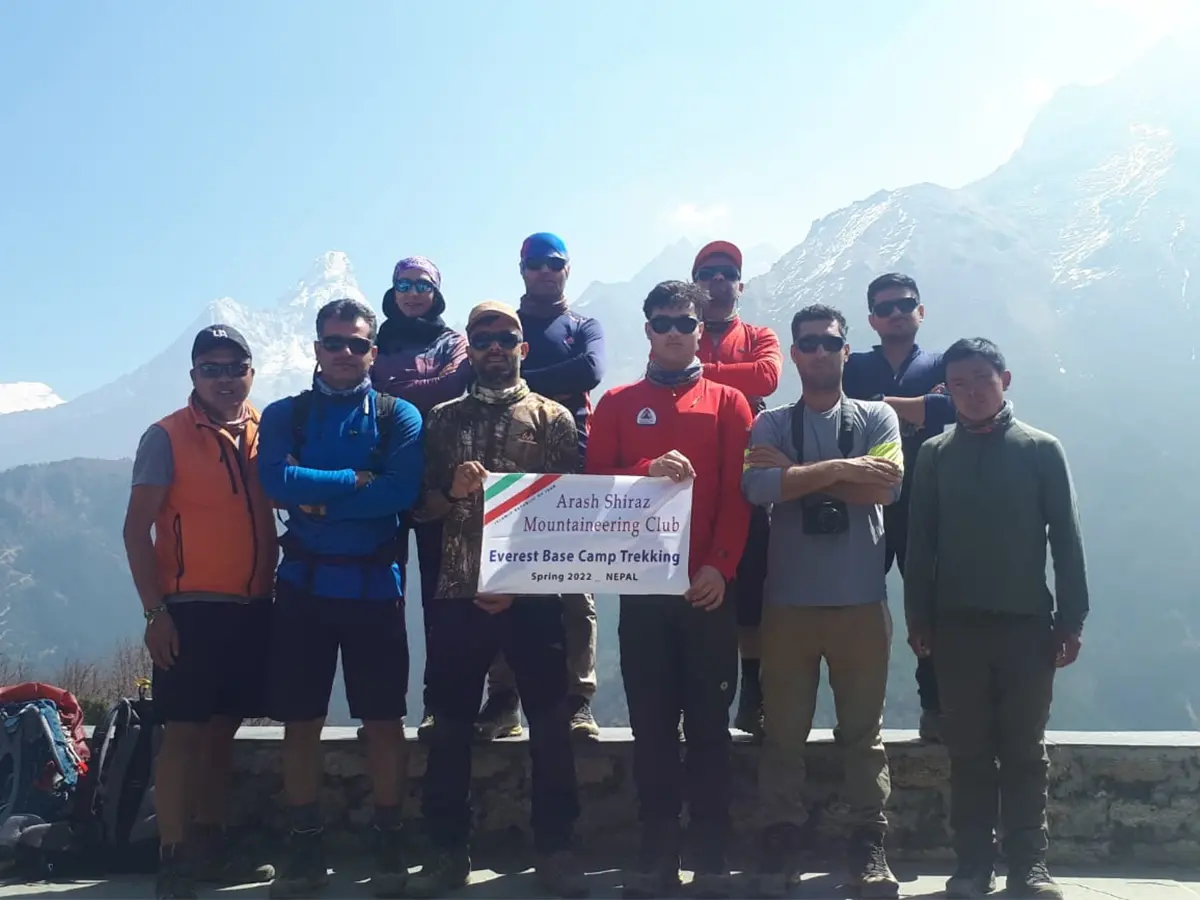
There are many treks in the Himalayas, but the Everest Base Camp trek is the most special one. This trek takes you to the lap of the tallest mountain on Earth, Mt. Everest. On the Everest Base Camp trek, you experience adventure, witness breathtaking mountain panoramas, and explore the lifestyle of the Sherpa community.

Duration
14 Days
Trip Grade
Moderate
Country
Nepal
Maximum Altitude
5,545 meters (Kala Patthar)
Starts
Kathmandu
Ends
Kathmandu
Group Size
12 People
Activities
Trekking and Hike
Best Time
March, April, May, September, October, and November

Highlights

  • Trek to the lap of the tallest mountain on Earth, Mt. Everest
  • Explore Kathmandu's bustle, divine energy, and delicious street foods
  • Take two Lukla flights to start and end the journey
  • Trek through rhododendron and pine-covered hills, terraced fields, and glacier moraines
  • Explore beautiful Sherpa villages along the trail and spend nights in those villages
  • Cross many suspension bridges on the Dudh Koshi River along the trail
  • Explore the rich flora and fauna of the Sagarmatha National Park
  • Come across prayer flags, prayer wheels, chortens, stupas, and monasteries on the way to EBC
  • Intimate interactions with the locals and make lifelong memories
  • Witness stunning mountain vistas and breathtaking landscapes
  • Go on adventurous side quests
  • Explore the Everest Base Camp and catch a surreal sunrise from Kala Patthar

Overview

There are many treks in the Himalayas, but the Everest Base Camp trek is the most special one. This trek takes you to the lap of the tallest mountain on Earth, Mt. Everest. On the Everest Base Camp trek, you experience adventure, witness breathtaking mountain panoramas, and explore the lifestyle of the Sherpa community.

If you love mountains, then you must see the tallest mountain in the world with your eyes. It is huge and spectacular. One of the most famous ways to travel to Mount Everest is trekking, which is popularly known as the Everest Base Camp trek.

The Everest Base Camp trek is a 14 days trip in Nepal. You will fly to Kathmandu, where the journey begins. Kathmandu welcomes you with its divine, chaotic energy. You will see temples in every corner of the city, meet friendly locals, explore bustling markets, and eat delicious local food.

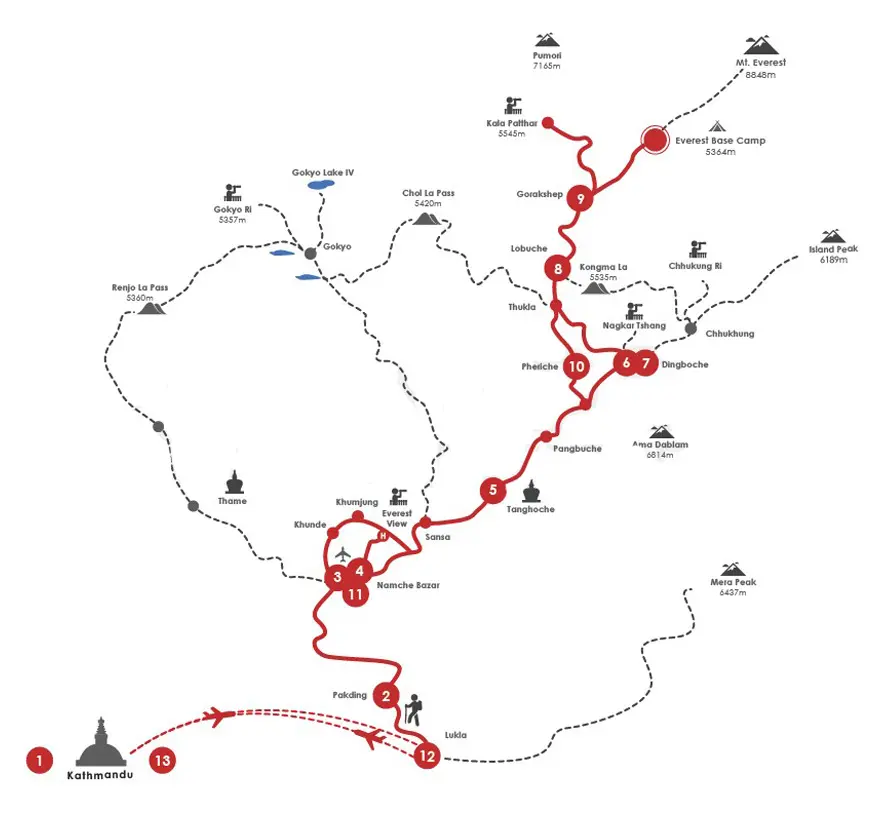
From Kathmandu, you will fly to Lukla. Lukla is the gateway of the Khumbu region (Everest region). The EBC trek starts from here. Check out our Everest Base Camp trek map for a visual image of the trail.

It takes eight days of trekking through rhododendron and pine-covered hills, terraced fields, and glacier moraines to reach Everest Base Camp from Lukla. Along the way, you will spend nights and have meals in beautiful Sherpa villages.

The trail ascends around 500 meters each day. The landscape will change with the elevation change. Once you trek ahead of Namche Bazaar, the mountain views are much clearer. We take two acclimatization breaks on the way to EBC.

Acclimatization breaks are essential to adapt to high altitude and avoid altitude sickness. You will follow the same routine every day that includes waking up early, having a big breakfast, hiking for 5 to 7 hours, and spending the evening mingling with locals and fellow trekkers.

The Everest Base Camp trek route is adventurous. You will cross several suspension bridges and trek alongside narrow cliffsides. Similarly, you will cross glacier moraines, and on the go, side quests to witness outstanding mountain vistas.

Overall, the Everest Base Camp trek is a journey full of adventure, wilderness, and exploration. Every day will bring something new for you. High altitude hiking is difficult, but with patience, determination, and the support of our reliable guide, you will complete the trek.

What to expect during the Everest Base Camp trek?

Lukla flights:

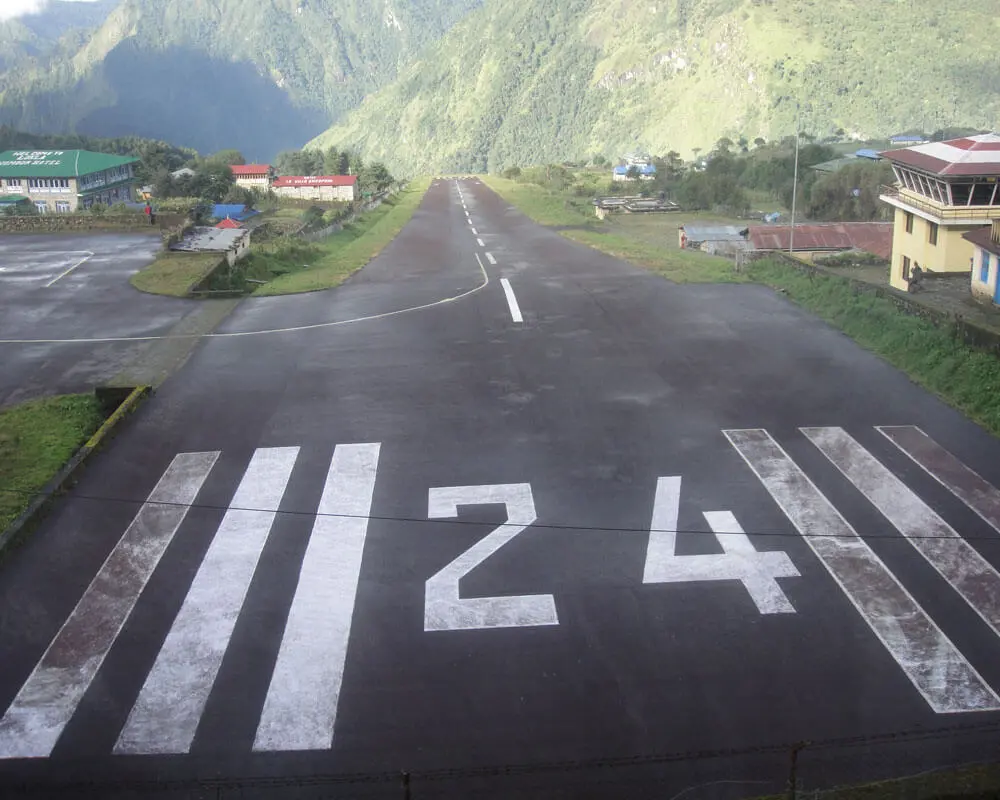
The quickest and affordable way to travel from Kathmandu to Lukla is the standard Lukla flights. The Lukla flights are quite famous because of Lukla airport's location, the tiny aircraft, and breathtaking aerial views of the Himalayas.

Beautiful Sherpa villages:

Although the remote location of the Everest region and the lack of roads, it is quite a lively area. The Everest Base Camp trail is dotted with beautiful Sherpa villages. Trekkers stop for the night in these villages. One of the major income sources for the locals is to provide accommodation and food to trekkers. 

Suspension bridges:

You will cross many suspension bridges during the Everest Base Camp trek. From Lukla, the trail goes along the Dudh Koshi River, crossing it several times.

Adventurous trail:

Varying altitude not only brings different climates and vegetation, but the trail condition also changes. The EBC trek route is within the Sagarmatha National Park. The trail constantly ascends and descends. You will travel across hills, meadows, and glacier moraines.

The bustle of Namche Bazaar:

Namche Bazaar is the biggest Sherpa village. It is also a tourist hub. This village is way bigger than you may have imagined. You can meet trekkers from around the world in Namche Bazaar and also enjoy many premium services.

Local culture:

The Everest Base Camp trek is also culturally enriching. You will come across prayer flags, prayer wheels, chortens, stupas, and monasteries throughout the trail. Locals will happily share their culture and practices with you.

Welcoming villagers and excellent hospitality:

The villagers are very welcoming and friendly. You will feel at home in this remote location. Even at a small teahouse, you will experience excellent hospitality.

Stunning mountain vistas:

We cannot rave enough about the mountain views during the EBC trek. You will see mountains such as Thamserku, Kongde Ri, Ama Dablam, Lhotse, Nuptse, Everest, Makalu, Cho Oyu, Island Peak, Lobuche Peak, Cholatse, Baruntse, Pumori, Chamlang, and many others.

Diverse landscapes:

Elevation change brings change in the landscape. The lush valleys turn into barren, glacial valleys as the trail ascends.

Side hikes:

You will go on side hikes to Hotel Everest View and Nangkartshang Peak during the Everest Base Camp trek. Both these hikes are important for acclimatization and offer breathtaking mountain vistas.

Everest Base Camp:

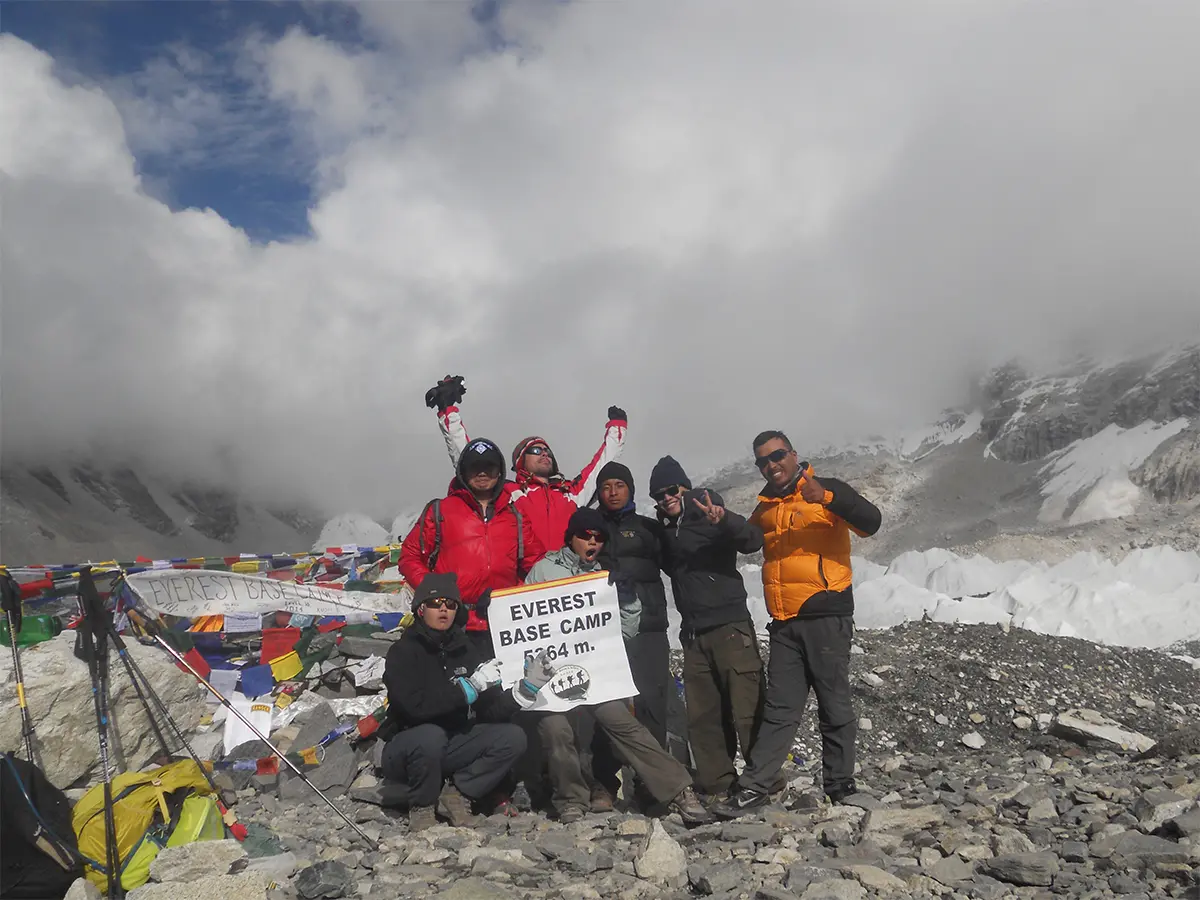
Everest Base Camp is the main destination you trek to on this trip. It is the lap of Mount Everest. This place is the closest humans can get to Everest without climbing.

Kala Patthar:

Kala Patthar is the last hike of the Everest Base Camp trek. You hike to this viewpoint to see one final panorama of Mt. Everest and a gorgeous sunrise.

Everest Base Camp trek route summary

Upon landing at Lukla airport, descend to Phakding to spend the night. The trail from here continues to Namche Bazaar, crossing the long Hillary Suspension Bridge.

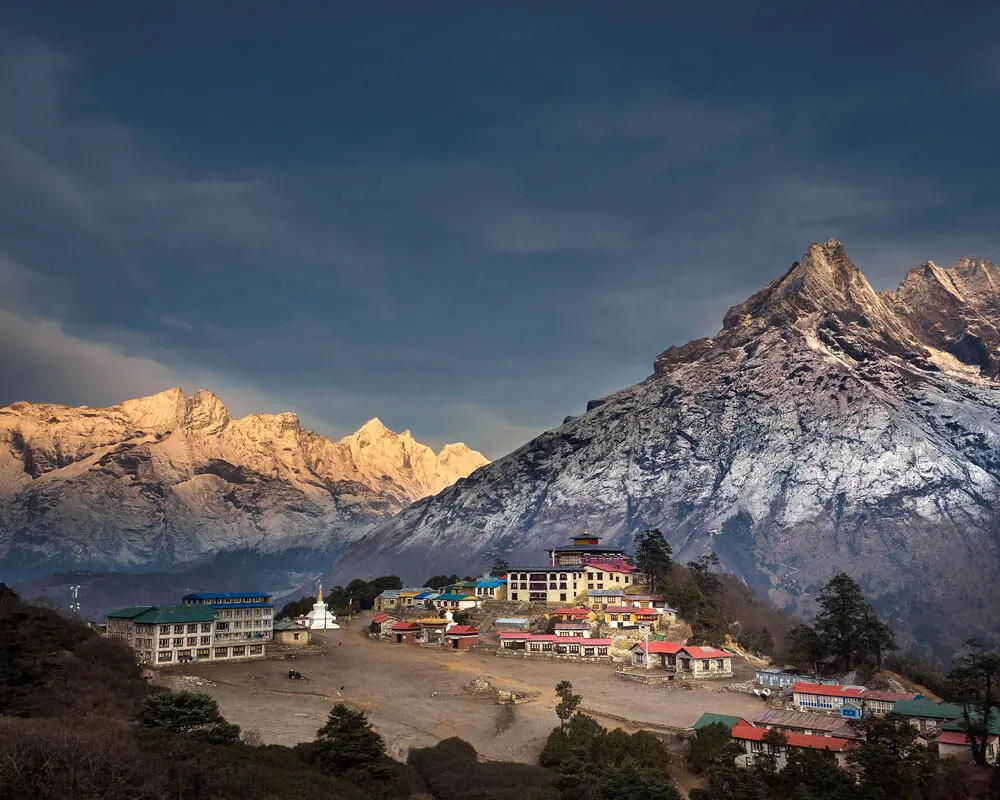
You will spend a day acclimatizing in Namche Bazaar and continue to Tengboche village. Explore the Tengboche monastery, the biggest monastery in the Khumbu region, and trek from here to Dingboche.

On the way, the trail descends to Deboche village and crosses a suspension bridge over Imja Khola before ascending to Pangboche village and then to Dingboche via terraced fields.

We have an acclimatization day in Dingboche as well. Further, continuing from here, you will hike to Lobuche village via Dughla. You are now trekking above the treeline.

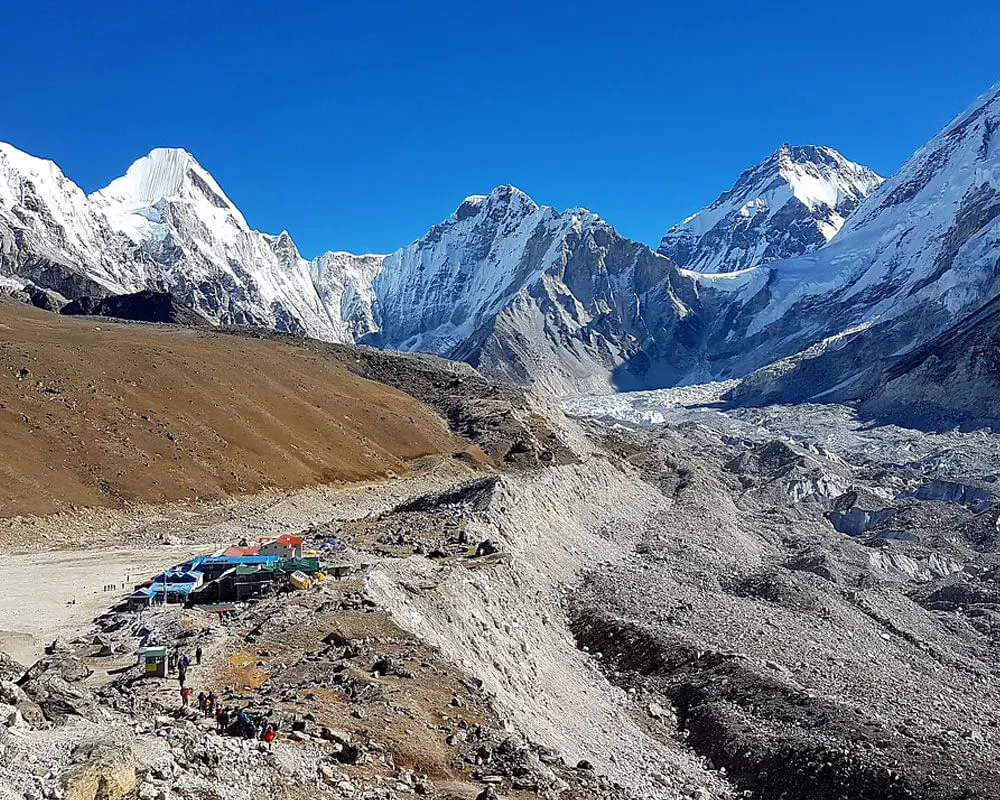
The trail then goes along the Khumbu Glacier and follows a steep, rocky track to Gorak Shep. Hike to Everest Base Camp (5,364 m/17,598 ft) on the same day and return to Gorak Shep to spend the night.

The following day, there will be an early morning hike to Kala Patthar (5,545 m/18,192 ft), where you can see a heavenly sunrise over Mt. Everest and other peaks.

After the hike, descend to Lobuche village and trek to Pheriche. From here, the trail passes through lush forests and small villages to Namche Bazaar and then returns to Lukla. Finally, a short flight from Lukla to Kathmandu concludes the Everest Base Camp trek.

Everest Base Camp trek variations

There are many ways to do the Everest Base Camp trek in Nepal. We have Everest Base Camp trek itineraries suitable for beginner trekkers, experienced trekkers, and budget-friendly travelers. Not only that, but we also organize a luxury EBC trek.

  • Combine helicopter return: You can return to Kathmandu in a helicopter after the Kala Patthar hike. It will save you three days of walking back to Lukla, which is almost 65 km. On top of that, you will witness close aerial views of the Himalayas. It will make your EBC trek excellent. Check out our Everest Base Camp trek with helicopter return package.
  • Upgrade to luxury accommodation: You can have an adventurous EBC trek while enjoying upscale amenities. From a 5-star hotel in Kathmandu to luxury lodges during the trek, you will have access to the finest services. Check out our luxury Everest Base Camp trek package.
  • Experienced trekkers: Are you an experienced trekker? Consider the Everest Base Camp trek with Gokyo Lakes or even the Everest Three Passes trek.
  • Looking for more than a trek: If you are seeking more than a trek in the Khumbu region, check out our Island Peak climbing and Lobuche Peak climbing packages. Both these trips take you to Everest Base Camp and the top of two stunning trekking peaks in Nepal.
  • Do not want to trek but see Mount Everest closely: Travelers who do not want to trek but want to witness Mount Everest closely will love your Everest Base Camp helicopter tour. It even includes landing at Lukla and the Everest View Hotel for breakfast.

Everest Base Camp trek cost and booking 2026

Our Everest Base Camp trek 2026 bookings are open. You can do the Everest Base Camp trek 14 days throughout the year with us.

If you are planning to do the EBC trek in spring or autumn, we recommend booking your seat early. It allows us to reserve accommodation in advance for you, ensuring you get the best place to spend the night.

We have fairly priced our Everest Base Camp trek package. There will be no compromise in service and safety. All of your support crew will be well paid.

If you have any questions regarding our Everest Base Camp trek cost or wish to customize the trip as per your interests, feel free to contact us anytime.

Why do Everest Base Camp trek with us?

With Mountain Life Treks, you will get the best Everest Base Camp trek cost, service, and benefits. We are a well-established local Nepali trekking company that specializes in treks, tours, and peak climbing in Nepal.

Trekking with us means you are traveling with local experts who know the Everest Base Camp route thoroughly. Not only that, but we also take care of trekkers who book their trip with foreign companies.

Foreign companies co-partner with local Nepali trekking companies like us, and we run their trip in Nepal. So, why not trek directly with us? The best part is that our Everest Base Camp trek cost is comparatively lower than theirs, but the service is the same.

By doing the Everest Base Camp trek 14 days with us, you will get the following benefits:

  • High safety and satisfaction
  • Flexible Everest Base Camp trek itinerary
  • Support from a professional mountain guide and a friendly porter
  • Experienced management team
  • 24/7 support
  • Complimentary airport transfers as per the itinerary
  • Free duffel bag to use during the trek
  • Fair Everest Base Camp trek price
  • Store your extra luggage in our office for free
  • Assistance in renting trek gear, like a down jacket, a sleeping bag, and trekking poles
Everest Base Camp Trek Itinerary

This is our standard handpicked daily itinerary. If you'd prefer a customized plan, feel free to share your ideas with us.

Day 1

Arrival in Kathmandu and transfer to the hotel

The Mountain Life Treks team will welcome you at the Kathmandu airport and transfer you to the hotel. Get some rest and meet us for the trek briefing in our office.

During the briefing, we will share all the important things about the EBC trek. You will also meet with your guide. After the briefing, buy trekking essentials and return to the hotel to pack your duffel bag and sleep.

Accommodation: Hotel
Day 2

Early morning flight from Kathmandu to Lukla airport and trek to Phakding (2,610 m/8,563 ft)

On this day, you will fly to Lukla early in the morning. But before you even fly, the adventure begins around midnight (1:00 AM). You leave Kathmandu at this time and drive to Ramechhap Airport to catch the Lukla flight.

It will be a 4 to 5-hour peaceful drive. From Ramechhap, it will take you more time to reach Lukla, where you will meet your porter.

The first night will be in Phakding village, which is situated below Lukla. The trail descends through rhododendron hills and small villages. You will cross many suspension bridges on the way.

*Lukla flights are operated from Ramechhap Airport in spring and summer.

*In winter and summer/monsoon, the Lukla flights are operated from Kathmandu Airport.

*Trekkers can upgrade to a helicopter flight. Helicopter flights are operated from Kathmandu Airport throughout the year.

Max Altitude: 2,846m (9,337ft)
Duration: 35 minutes flight & 3 hours trek
Distance: 6.2 km/3.8 miles
Meals: Breakfast, lunch & dinner
Accommodation: Lodge
Day 3

Trek from Phakding to Namche Bazaar

Phakding to Namche Bazaar is a long walk. The trail follows the Dudh Koshi River and goes through lush hills. You will pass by small villages on the way and cross several suspension bridges.

The EBC trek permits are registered in Monjo village. From here, the Sagarmatha National Park starts. Keep ascending through lush hills. The final uphill hike is steep.

Max Altitude: 3,440m (11,286ft)
Duration: 6-7 hours
Distance: 7.4 km/4.6 miles
Meals: Breakfast, lunch & dinner
Accommodation: Lodge
Day 4

Acclimatization in Namche Bazaar: hike to Hotel Everest View

Acclimatization day means spending the night in the same village, but in the morning, you will hike to a high altitude. From Namche Bazaar, you will hike to Hotel Everest View.

It is a gradual but tough hike. The route offers breathtaking vistas of Thamserku. Upon reaching Hotel Everest View, you will see mountains like Everest, Lhotse, Nuptse, and Ama Dablam.

After the hike, return to Namche Bazaar. Visit museums and explore the bustling cafes and shops in this beautiful mountain town.

Max Altitude: 3,962m (12,998ft)
Duration: 4-5 hours
Meals: Breakfast, lunch & dinner
Accommodation: Lodge
Day 5

Trek from Namche Bazaar to Tengboche village

Trekking further from Namche Bazaar, you will head to Tengboche village. It is another major stop on the EBC route. The trail descends to Phungi Thenga and ascends from here to Tengboche village.

It is a lovely walk alongside rugged hills. In Tengboche, explore the biggest monastery in the Khumbu region and witness a wonderful view of Everest, Lhotse, Nuptse, and Ama Dablam.

Max Altitude: 3,860m (12,664ft)
Duration: 5-6 hours
Distance: 9.2 km/5.7 miles
Meals: Breakfast, lunch & dinner
Accommodation: Lodge
Day 6

Trek from Tengboche to Dingboche

Trekking through dense forests, you will descend from Tengboche to Deboche village. The trail descends all the way down to Imja Khola.

Cross the river via a suspension bridge and ascend to Pangboche village. Further, the trail scenes through small settlements and terraces of potatoes, buckwheat, and barley. 

Max Altitude: 4,410m (14,468ft)
Duration: 6 hours
Distance: 12 km/7.45 miles
Meals: Breakfast, lunch & dinner
Accommodation: Lodge
Day 7

Acclimatization day- hike to Nangkartshang Peak

This is the second acclimatization day. Follow your guide's lead to the top of Nangkartshang Peak. It will be a challenging hike, but you will get to see a spectacular view of mountains like Everest, Lhotse, Makalu, Cho Oyu, Ama Dablam, and many more. After enjoying the views, walk back to Dingboche to spend the rest of the day.

Max Altitude: 5,100m (16,732ft)
Duration: 5 hours
Meals: Breakfast, lunch & dinner
Accommodation: Lodge
Day 8

Trek from Dingboche to Lobuche

Leaving Dingboche village, the trail ascends to a ridge and continues alongside the Khumbu Glacier. You will ascend to Dhugla (pass) marked with maniwalls.

Depending on the weather, the pass can be covered with snow. From here, you will ascend to Lobuche village. On the way, explore the memorial chortens made for climbers who passed on Mt. Everest.

Max Altitude: 4,940m (16,207ft)
Duration: 5-6 hours
Distance: 8.5 km/5.2 miles
Meals: Breakfast, lunch & dinner
Accommodation: Lodge
Day 9

Trek from Lobuche to Everest Base Camp via Gorak Shep (5,164 m/16,942 ft) and back to Gorak Shep for a night's stay

Today, you have a long day ahead of you. You will make it to Everest Base Camp. From Labouche village, trek along the lateral moraine of the Khumbu Glacier. The terrain will be rocky and steep. You will leave your heavy luggage in Gorak Shep and hike another two hours to reach EBC.

Upon reaching EBC, you will be welcomed with the iconic large stone. Explore the base camp and see the close view of Khumbu Icefall. Then return to Gorak Shep to spend the night.

Max Altitude: 5,364m (17,598ft)
Duration: 8 hours
Distance: 15 km/9.32 miles
Meals: Breakfast, lunch, and dinner
Accommodation: Lodge
Day 10

Hike to Kala Patthar early in the morning and trek down to Pheriche (4,371 m/14,340 ft)

This morning brings one last hike to Kala Patthar. Start hiking before sunrise, and by the time you reach Kala Patthar, the sun will be out with its golden rays all over the snowy mountains.

The view of Everest is outstanding from Kala Patthar, so we hike here before leaving Gorak Shep. After the hike, trek back to Lobuche village following the same route. From here, trek to Pheriche village following a slightly different route.

Max Altitude: 5,545m (18,192ft)
Duration: 6 hours
Distance: 9.6 km/6 miles
Meals: Breakfast, lunch & dinner
Accommodation: Lodge
Day 11

Trek from Pheriche to Namche Bazaar

The trail descends from Pheriche to Tengboche village. From here, descend to Phungi Thenga and gradually ascend to Namche Bazaar. You may see pheasants, mountain goats, and donkeys on the way.

Max Altitude: 3,440m (11,286ft)
Duration: 7-8 hours
Distance: 17.7 km/10.9 miles
Meals: Breakfast, lunch & dinner
Accommodation: Lodge
Day 12

Trek from Namche Bazaar to Lukla

Follow a steep downhill route and walk through forested hills to Monjo. From here, you will follow the Dudh Koshi River and descend to Phakding village. The trail then slowly ascends to Lukla, retracing the same route. B

Max Altitude: 2,846m (9,337ft)
Duration: 8 hours
Distance: 13.6 km/8.3 miles
Meals: Breakfast, lunch & dinner
Accommodation: Lodge
Day 13

Morning flight back to Kathmandu from Lukla airport & hotel drop

This morning you will fly back to Kathmandu. It will be a thrilling flight. You can land at Ramechhap or Kathmandu airport, depending on the season you are trekking.

We will provide a comfortable four-wheeler to travel from both these villages to your hotel in Thamel. The remaining day is leisure in the city. Rest, explore, and buy a souvenir.

Max Altitude: 1,400m (4,593ft)
Duration: 35 minutes flight
Meals: Breakfast only
Accommodation: Hotel
Day 14

Transfer to the international airport for final departure

With many memories, it is time to fly back to your home. Our team will transfer you to the international airport and bid you our well wishes.

Meals: Breakfast only
Still Confused?
No worries - our team is ready to guide you every step of the way.

Everest Base Camp Trek Route Map

Route Mp

Altitude Chart

Cost Details

Includes

  • Airport pick-ups and drop-offs by private four-wheeler
  • 2 Lukla flights
  • 2 nights in a 3-star hotel in Kathmandu (twin-sharing accommodation)
  • 11 night lodge accommodation during the trek
  • Three meals (breakfast, lunch, and dinner with tea/coffee and seasonal fruit) a day during the trek
  • Licensed Nepali guide and porter (one porter for two trekkers)
  • Assistant guide for groups of 5 or more people
  • Accommodation, food, allowance, and high altitude insurance for the guide and porter
  • Sagarmatha National Park permit
  • Khumbu Pasang Lhamu Rural Municipality permit
  • Down jacket, trekking poles, and a four-season sleeping bag to use during the trek
  • Exclusive first-aid kit, including oximeter
  • Helicopter evacuation arrangement (expenses should be covered in your travel insurance)
  • Trip achievement certificate
  • All government taxes and service charges

Excludes

  • Nepal travel visa fee (USD 30 for 15 days, USD 50 for 30 days, and USD 125 for 90 days)
  • International flight to/from Kathmandu
  • Travel insurance (must cover helicopter evacuation and medical bills)
  • Lunch and dinner in Kathmandu
  • Trekking clothes and gear
  • Shopping and souvenirs
  • Tips for driver, guide, and porter
  • Bar bills, water bottles, and other beverages
  • Personal expenses during the trek (like WiFi, charging, and hot showers)
  • Departure taxes
  • Any expenses not mentioned in our cost include section

Dates & Availablity

Select Departure Dates
Starts on Monday:09 Mar, 2026
Ends on Sunday:22 Mar, 2026
Status:Guaranteed
Price From
US$1600
Starts on Monday:30 Mar, 2026
Ends on Sunday:12 Apr, 2026
Status:Guaranteed
Price From
US$1600

Everest Base Camp Trek Equipment Lists

Everest Base Camp trek packing list

Packing smartly for the EBC trek is important. Below, we have curated a comprehensive packing guide that will help you be well-packed for this adventurous voyage:

Head
Head
  • Sun Cap
  • Wool/Fleece Hat
  • Neck Gaiter/High Neck
Hands
Hands
  • Wind Stopper Fleece Gloves
Upper Body
Upper Body
  • Short-Sleeved Shirts/T-shirts
  • Lightweight Top/Thermo Coat 
  • Synthetic or Fleece Jacket
  • Down Insulated Jacket
Lower Body
Lower Body
  • Underwear
  • Lightweight Long Underpants 
  • Insulated Trekking Pants
  • Trekking Socks
  • Trekking Boots
Sun Stuffs
Sun Stuffs
  • 1 Sleeping Bag: -30 +C to -40 +C
  • Sunglasses UV Protection
  • Extendable Trekking Poles (BD Alpine Flz)
Toiletries
Toiletries
  • Sunscreen (high SPF)
  • Lips Guard (with SPF)
  • Baby Wipes or Wet Towels
  • Hand Sanitizers and hand wash
  • Wet Tissues
  • Toothpaste and Toothbrush
  • Bath Soap and Shampoo
  • Moisturizers 
  • Laundry Soap
  • Garbage Bag
Travel Documents
Travel Documents
  • Valid Passport
  • Valid Visa
  • 4 PP Size Photo
  • Insurance Paper (Medical & Rescue) & Contact Address
  • Family/Company Contact Number & Address
  • Credit Card
Miscellaneous
Miscellaneous
  • Swiss Knife (optional)
  • Water Purification Tablets
  • Sandals
  • Rucksacks (45 - 55 Ltr.)
  • 1 Duffel Bag (provided by us)
  • Reusable Water Bottle
  • Umbrella/RainCoat
  • Spare batteries
  • Waterproof Stuff Sacks
  • Solar chargeable power bank (optional)
  • Journal/Pen
  • Book/Board Game
  • Bars & Snacks
  • First-Aid Kit

Essential Information

Everest Base Camp trek difficulty

The Everest Base Camp trek difficulty is moderate. You will trek for 11 days, covering around 130 kilometers. The walk is not technical but high altitude, around 6 hours of walking each day, and rugged terrain can become challenging, especially if you are not fit.

The EBC trek is considered a beginner-friendly trek, but it doesn't mean you can complete this trek in bad shape. Even if you are trekking for the first time, your health and fitness matter a lot.

  • Difficulty: Moderate/demanding
  • Hiking duration each day: 6 hours a day on average
  • Terrain: Rugged terrain with a handful of steep climbing and rocky tracks
  • Climate: Along the Everest Base Camp trail, you will experience varying climate and environment. The trek begins from rhododendron and pine forests and gradually ascends to terraced fields and meadows. You will also travel on glacier moraines. It shows how the climate varies during the EBC trek.
  • Services: Services are great on the Everest Base Camp trek route, but you will be paying for everything, such as charging your camera, hot showers, and WiFi. So, we recommend having backups and budgeting personal expenses accordingly.

Altitude sickness during the Everest Base Camp trek

You see a drastic change in altitude from Kathmandu to Lukla, which can trigger altitude sickness. So, to avoid it, we descend to Phakding village to spend the night.

The next day, you reach Namche Bazaar, which is situated 3,440 meters above sea level. Again, a quick gain in elevation. But to overcome it, we spend an acclimatization day in Namche Bazaar.

Although we take precautions to deal with quick altitude gain during the EBC trek, some trekkers may not adjust to high altitude and can suffer from altitude sickness.

Above 2,500 meters, oxygen levels are not the same as around sea level, and the higher you ascend, the lower the oxygen level will get. This causes altitude sickness because your body is not used to low oxygen levels.

  • How to avoid altitude sickness: Acclimatization breaks, keep yourself hydrated, ascend slowly, maintain a steady pace while hiking, do not drink alcohol or smoke while ascending, get ample sleep, eat carbohydrate-rich food, and listen to your body.
  • Symptoms: Headache, insomnia, loss of appetite, vomiting, dizziness, nausea, breathlessness, etc.

Travel insurance for the Everest Base Camp trek

Travel insurance is an important document to join the Everest Base Camp trek with us. It must cover helicopter evacuation up to 5,00 meters. We do not accept travel insurance without this coverage.

Adventure in the Himalayas comes with unpredictable events. Although we are experienced and prepared for everything, it is best to trek with a backup, like helicopter evacuation coverage.

Everest Base Camp trek permit

The Everest Base Camp trek requires two permits: the Sagarmatha National Park Permit and the Khumbu Pasang Lhamu Rural Municipality Entry Permit.

Both these permit fees are covered in our Everest Base Camp trek package cost. Our team will obtain the permit on your behalf.

Accommodation during the Everest Base Camp trek

The Everest Base Camp trek route has both luxury and budget-friendly accommodations available. You can choose accommodation and services as per your budget.

Our Everest Base Camp trek package includes night stays in a standard lodge. It is a simple accommodation with minimal services, but the rooms are clean and comfortable.

  • Rooms: We book twin-shared rooms. So, you will be sharing with one fellow trekker. Separate beds will be available with a blanket and pillow.
  • Single rooms: Single rooms are available at an extra charge. It may not be available in Gorak Shep during peak trekking seasons.
  • Toilets: Washrooms are usually made outside of the lodge. It is shared between the trekkers. A private washroom is not so common in a standard lodge. Western-style toilets are available in many places on the EBC route.
  • Hot shower, charging, and WiFi: You have to pay a few extra bucks for these three services. It is not included in the room price or in our EBC trek package. Better have backup like wet wipes, a power bank, and a local SIM.

*Our Everest Base Camp trek package cost does not include personal expenses such as WiFi fee, charging fee, and hot showers during the trek.

Food during the Everest Base Camp trekking

Our EBC trek package only includes breakfast in Kathmandu. As there are many dining options, you can choose lunch and dinner as per your wish.

During the Everest Base Camp trekking, you will get three meals a day. Each meal will be provided as per the menu of the lodge.

  • Breakfast: We have breakfast around 7 or 8 AM. It will mostly consist of options like French toast, pancake, toast with eggs and cheese, plain toast with jam/butter, chapati, Tibetan bread, porridge, mashed potatoes, etc.
  • Lunch and dinner: For lunch and dinner, we have options such as thukpa, rilduk, shyaphale, potato pancake (riki kur), fried rice, dal bha, stew, stir fries, curries, paratha, noodles, pasta, momo, etc. Even pizza, burgers, and sandwiches are also available in some villages.
  • Beverages: Different types of tea and coffee are available throughout the EBC trail. On top of that, you will also get hot chocolate, cafe lattes, cappuccinos, energy drinks, fizzy drinks, juice, etc.
  • Drinking water: Boiled water is best to drink during the EBC trek. It is safe and costs way less than bottled water. Likewise, tap water is also available throughout the way. But cure the tap water with a water purification tablet to avoid any chance of stomach or indigestion.

Everest Base Camp trek best time

Spring (March to May) and autumn (September to November) are considered the best time for Everest Base Camp trek. These transition seasons have stable weather in the Himalayas, so most treks and even peak climbing are done in spring and autumn.

If we have to pick the finest months with perfect weather, pleasant climate, and brightest days, it would be April, May, October, and November.

In early March and September, there can be snowfall or rainfall as the weather is slowly shifting. These months are best to trek Everest Base Camp if you wish to avoid the crowd of peak trekking seasons.

Everest Base Camp trek in winter

December, January, and February are the winter period. The temperature drops below the freezing point. As you get close to EBC, the cold will increase.

Although winter is often considered an off-season for the EBC trek, it is a great time to enjoy peaceful trails, along with lower prices for accommodation and Lukla flights.

Everest Base Camp trek in summer/monsoon

June, July, and August are other off-times for the Everest Base Camp trek. The very hot and humid climate, combined with frequent rain starting in July, makes the trail muddy and slippery at lower elevations. Likewise, Lukla flights are highly affected.

    Everest Base Camp Trek FAQs

    Q1. How difficult is the Everest Base Camp trek?

    The Everest Base Camp trek difficulty is moderate. With the progress of the trek, it may get a bit challenging because of the high altitude and steep terrain. Overall, the EBC trek is quite achievable if you put your mind to it.

    Q2. How long does the Everest Base Camp trek take?

    It takes 14 days to complete the Everest Base Camp trek. We also have a 12-day EBC trek, along with much longer and advanced versions. Likewise, the total distance covered during the EBC trek is 130 km (65 km each side).

    Q3. What is the best time to do the Everest Base Camp trek?

    The best time to do the Everest Base Camp trek is March, April, May, September, October, and November. You can also enjoy this trek in early December and late June.

    Q4. How much does the Everest Base Camp trek cost?

    You can see different Everest Base Camp trek costs online. Even though the destination is the same, the services provided in the package and the trek company's experience and reputation may impact the EBC trek cost.

    Q5. Is the Everest Base Camp trek suitable for beginners?

    Yes, the Everest Base Camp trek is suitable for beginners. But they have to be fully prepared to enjoy the journey. The fitter you are, the more you enjoy the trek.

    Q6. Can I do the Everest Base Camp trek without a guide?

    You can obtain the Everest Base Camp trek permits in Kathmandu on your own and do the trek without a guide. But it comes with safety concerns and the hassle of managing the transportation, Lukla flights, and accommodation in the mountains. Are you ready for the logistical challenges in one of the remote corners of the world?

    Q7. Is altitude sickness common on the Everest Base Camp trek?

    Yes, altitude sickness is common on the Everest Base Camp trek. But it doesn't mean all trekkers suffer from it.

    If you have a well-planned itinerary with ample acclimatization days built in and follow preventive measures, you can complete the trek without suffering from acclimatization.

    Q8. How cold does it get on the Everest Base Camp trek?

    On the Everest Base Camp trek, you will experience varying temperatures. The upper parts of the trail (above Dingboche village) are much colder than Lukla and Namche Bazaar. Although the daytime is quite sunny, the nights and mornings are cold in the mountains throughout the year.

    Q9. Is WiFi or a mobile network available on the Everest Base Camp trek?

    WiFi and mobile networks are both available along the Everest Base Camp trek route, but the network is not good in either case.

    Lodges offer paid WiFi service that you can access by paying a small fee. Likewise, you can purchase a Nepali tourist SIM (preferably NCELL) and get data to use during the trek.

    Q10. Are hot showers available during the Everest Base Camp trek?

    Yes, hot showers are available during the Everest Base Camp trek. But above Namche Bazaar, it gets physically demanding to take a shower due to the cold climate.

    Unless you are doing a luxury trek where you have access to steamy hot water, AC, and insulated rooms, we recommend not showering, especially after Tengboche village. Because a cold body has a high chance of hyperthermia.

    Q11. How crowded is the Everest Base Camp trek?

    The Everest Base Camp trek route gets quite crowded in the spring and autumn seasons. These are peak trekking seasons, and the EBC trail welcomes thousands of trekkers in both seasons.

    Q12. Can the Everest Base Camp trek be done in winter?

    Yes, you can do the Everest Base Camp trek in winter. It is also a great time of the year if you want to enjoy a peaceful trek. Likewise, the Lukla flight rates and accommodation prices are also low in winter.

    Q13. Can the Everest Base Camp trek be done in the monsoon season?

    Monsoon can be tricky, especially since the Lukla flights are highly affected. Once the peak monsoon period begins, the flight gets suspended for 10 more days back-to-back. You have to be well-planned, packed, and supported to do the EBC trek in the monsoon season.

    Q14. How do I reach Lukla for the Everest Base Camp trek?

    You can take a standard Lukla flight or fly in a helicopter to reach Lukla from Kathmandu for the Everest Base Camp trek.

    Q15. Can the Everest Base Camp trek be customized or shortened?

    Yes, you can customize the Everest Base Camp trek with us. We can shorten the itinerary or extend the trek by combining other destinations such as Gokyo Lakes.

    Q16. Is the Everest Base Camp trek worth it?

    Yes, the Everest Base Camp trek is 100% worth it. This trip will rewire your brain. You will have a lifetime adventure and enjoy some of the most outstanding mountain vistas. The EBC trek is also culturally uplifting and presents a deep sense of camaraderie.