
Ama Dablam with Island Peak Climbing

2 Reviews in TripAdvisor
Duration
25 Days
Trip Grade
Very Strenuous
Country
Nepal
Maximum Altitude
6,812 m
Starts
Kathmandu
Ends
Kathmandu
Activities
Trekking and Climbing
Best Time
October to mid-November, April to May

Highlights

  • An adventurer and a lifetime climbing experience in Nepal
  • Climb two mountains in one voyage- Island Peak and Ama Dablam
  • Perfect for mountaineers looking for their next adventure in the Himalayas
  • Supported by an expert team of climbers who have summited both mountains numerous times before
  • Explore Nepali culture and tradition during the trip
  • See the lifestyle and practices of the Sherpa community while trekking to the mountains
  • Experience the famous Lukla flights
  • Witness stunning landscapes and breathtaking mountain vistas

Ama Dablam with Island Peak climbing is one of the most adventurous, exciting, and challenging expeditions in the Everest region in Nepal. This trip combines climbing two famous mountains- Island Peak and Ama Dablam.

Known as the Matterhorn of the Himalayas, Ama Dablam is one of the most stunning and technically advanced mountains in the Himalayas. Located in the Everest region in Nepal (near Mt. Everest), Mount Ama Dablam has a pretty unique pyramid shape.

Ama Dablam is famous for its unique shape, technical challenges, and exposed ridges. If you are serious about mountaineering, then you must experience climbing Ama Dablam at least once in your life.

Likewise, the Ama Dablam expedition is also great for practice and acclimatization before 8,000-meter expeditions such as Everest, Annapurna, and Manaslu.

On Mount Ama Dablam, you will hone your climbing skills, judgment, and composure. The climb is treacherous and extremely challenging, but also incredibly rewarding.

If you are interested in climbing Ama Dablam in 2026, plan your expedition with our expert team of climbers. Our Sherpa guides have been climbing Mount Ama Dablam for many years. We are one of the top Nepalese climbing companies with an excellent track record, high success rate, safety guarantee, and top-notch base camp service.

Why climb Ama Dablam with Island Peak?

Climbing Island Peak before Ama Dablam is very smart. It allows you to acclimatize and practice climbing on snow slopes at high altitude.

You can climb Island Peak and return in one day from its base camp. So, the trip is not extended too long. Most importantly, you will have a climbing certificate of one of the most famous trekking peaks in Nepal.

If you are an experienced climber and do not need to climb Island Peak to acclimatize, we can remove it from our Ama Dablam expedition itinerary.

Ama Dablam with Island Peak climbing difficulty

The Ama Dablam with Island Peak climbing is a very strenuous journey, only suitable for experienced mountaineers.

Island Peak difficulty:

Island Peak is not that technically challenging. However, climbing this peak is physically very taxing. You will walk on snow slopes and traverse a few small crevasses.

Before the Island Peak summit, climbers have to cross a steep 2000-meter icy headwall. High altitude, freezing cold, strong wind, and low oxygen levels make Island Peak climbing demanding.

Climbing Island Peak before Ama Dablam will prepare you for bigger challenges!

Ama Dablam difficulty:

As we have shared earlier, Mt. Ama Dablam is one of the technically challenging mountains. Likewise, it also demands significant physical and mental endurance.

Summit bids are long and tiring and can last up to 14 hours. You will be exposed to strong winds, extreme cold, and low oxygen levels. Additionally, there are also risks of avalanches and rockfalls on Ama Dablam.

The climbing route has crevasses and ice headwalls. You will cross the Mushroom Ridge and the Yellow Tower (vertical 80-90 degree rock wall). Similarly, you will traverse a narrow, icy ridge and a steep 55-65 degree snow, ice, and rock portion to reach the summit.

Who can do the Ama Dablam with Island Peak climbing 25 days?

  • The Ama Dablam with Island Peak climbing is recommended for climbers who have previous climbing expertise and technical climbing knowledge.
  • The Ama Dablam is best for those who have climbed peaks higher than 6,000 meters before.
  • You will need advanced rock and ice climbing, scrambling proficiency, and be able to use climbing gear. Along with that, anyone planning to climb Ama Dablam with Island Peak must be physically and mentally strong.
  • You have to be mountain smart to climb Mount Ama Dablam. Our Sherpa guides are there to show you the route and help you navigate treacherous sections, but you have to do the climbing by yourself.
  • If you want to climb Ama Dablam, you have to be serious about your health, fitness, mental readiness, technical climbing skills, and previous climbing experience.
  • Another important requirement for Ama Dablam with Island Peak climbing is that you have to be able to adjust to limited services. We provide excellent base camp service, yet there are limitations, such as no mobile network or internet, expensive satellite calls, not your usual toilet conditions, cold weather, etc.

Will there be any cultural encounters during the Ama Dablam expedition?

Of course, you will have plenty of cultural encounters during the Ama Dablam expeditions. Starting the journey from Kathmandu, you will get to see Nepalese culture and traditions closely.

While trekking to Island Peak and Mount Ama Dablam, you will travel through beautiful Sherpa villages. You will spend nights in those villages at various elevations along the way.

During your time in the villages, you will have a close glimpse of the lives of the locals. Likewise, along the trail, you will also visit monasteries and explore old stupas.

Before we begin Ama Dablam climbing, we do a traditional prayer to ask blessings from the mountain and valley gods for a safe and successful climb.

So, even though the Ama Dablam with Island Peak climbing is an adventurous voyage, every aspect of the journey will be wrapped with Nepalese culture, beliefs, prayers, and blessings!

Helpful tips for Island Peak climbing and the Ama Dablam summit

  • Include loss or damage of climbing gear and personal items, as well as unavoidable circumstances such as weather delays and flight cancellations, in your travel insurance.
  • You should start working on your strength, stamina, and endurance several months before your Ama Dablam with Island Peak climbing date.
  • Strictly follow our recommendations. Once on the mountain, follow our acclimatization plan and your guide's suggestions. We know what we are doing, and we can only ensure your safety if you listen to us.
  • Do not cheap out on climbing gear quality. If the expenses are going over your budget, rent a climbing suit, boots, and other essentials in Kathmandu.
  • Drink plenty of water and soups during trekking and climbing. Ginger-honey teas are incredible. It is soothing and literally brings life back to you. Keep yourself hydrated to avoid altitude sickness.
  • We cannot emphasize how patience, focus, flexibility, and a positive mindset are important for climbing a mountain in the Himalayas. The Himalayas are unpredictable, and changes in plans are not uncommon. You have to be willing to accept as many changes as are required for a successful summit.
  • Do not litter the mountain. It is a serious offense, and you can be fined and banned from climbing mountains in Nepal. Follow the garbage disposal rules.
  • Pack plenty of energy drinks, protein bars, gums, nuts, electrolytes, instant foods, and snacks for the journey. Although we provide delicious meals during climbing, you can have your own stack of munchies, too. And do not forget, sharing is caring.
  • Tipping the guide, porter, and support crew is a common culture. So, budget the tip in advance.

Ama Dablam with Island Peak climbing cost

With us, you can do the Ama Dablam with Island Peak climbing at a very reasonable price. Our Ama Dablam expedition cost starts at USD XXXXX per person.

The package price includes accommodation and breakfasts in Kathmandu, airport transfers as per the itinerary, Lukla flights, accommodation and food during trekking, full board base camp service, high camp service on Ama Dablam, Sherpa guides, assistant guides, cook, porters, first aid kit, oxygen cylinder for emergency, Ama Dablam with Island Peak climbing permit, and company's service charge.

In short, our Ama Dablam with Island Peak climbing package includes full logistical support. We also have a special offer for 2 or more climbers. So, if you are in a group, book the trip together to get the special discount.

If you have any questions about the Ama Dablam with Island Peak climbing, feel free to talk to us. Bookings are open for the Ama Dablam expedition 2026 departures.

Why climb Mount Ama Dablam with Mountain Life Treks?

Climbing a mountain like Ama Dablam's caliber requires serious planning, strong team support, and substantial preparation. We, Mountain Life Treks, will be your reliable climbing partner for Ama Dablam.

Over the years, our team has managed to secure many successful attempts at Ama Dablam. We have led mountaineers from all around the world on Island Peak and Ama Dablam.

Our guides know how to lead the climbers, ensure their safety, and provide maximum adventure/enjoyment during the expedition. Climbing a lofty mountain like Ama Dablam is not easy, but we make it possible.

Below, we have shared some of the perks you will get while doing the Ama Dablam with Island Peak climbing with us:

  • IFMGA or NMA certified guide leader
  • 1:1 Sherpa/Client ratio
  • Porters as per group size
  • Head chef and kitchen helpers
  • Separate team to study the weather and keep us updated
  • Well-planned itinerary and strategic acclimatization
  • No hidden charges
  • Incredible base camp service
  • Flexibility in service and itinerary
  • 24/7 support
  • Comprehensive first aid kit, satellite phone, and supplemental oxygen cylinder
  • Emergency helicopter evacuation
  • 100% safety guarantee

Ama Dablam with Island Peak Climbing Itinerary

Day 1

Arrival in Kathmandu and transfer to the hotel

We will welcome you at the airport and escort you to the hotel. Our team will help you with your luggage. We use a private vehicle, so commuting to the hotel will be comfortable.

After check-in, you can spend the rest of the day as you wish. We recommend taking a break and then exploring the bustling streets of Thamel.

Accommodation: Hotel
Day 2

Guided sightseeing tour in Kathmandu and trek preparation

You will spend the morning touring popular monuments with one of our experienced tour guides. You will visit the Monkey Temple, Pashupatinath Temple, Bouddha Stupa, Patan Durbar Square, and Kathmandu Durbar Square.

After the tour, have lunch and rest. We then meet in the late afternoon/evening for a trip briefing. You can buy trekking and climbing gear. A rental option is also available for many gears.

Meals: Breakfast
Accommodation: Hotel
Day 3

Early morning flight from Kathmandu to Lukla airport and trek to Phakding (2,610 m/8,563 ft)

For the Lukla flight, you will leave your hotel around 1:00 AM and drive to Ramechhap Airport. It takes approximately 4 to 5 hours to reach Ramechhap Airport from Kathmandu.

The drive will be smooth, and you will reach the airport in no time. From Ramechhap Airport, you will reach Lukla in around 30 minutes of flying. The trek begins in Lukla.

You will walk downhill through rhododendron forests and small Sherpa villages. On the way, cross several suspension bridges over the beautiful Dudh Koshi River.

Important note:

i. In spring and autumn, the Lukla flights are operated from Ramechhap Airport instead of Kathmandu Airport.

ii. In summer/monsoon and winter, the Lukla flights are operated from Kathmandu Airport.

iii. You can take a helicopter flight from Kathmandu to Lukla throughout the year.

iv. Contact us to upgrade to a helicopter flight between Kathmandu and Lukla. It will cost you an additional $550 to $600.

Max Altitude: 2,846m (9,337ft)
Duration: 35 minutes flight & 3 hours trek
Distance: 6.2 km/3.8 miles
Meals: Breakfast, lunch, and dinner
Accommodation: Lodge
Day 4

Trek from Phakding to Namche Bazaar

Continuing the trek from Phakding village, you will follow the banks of the Dudh Koshi River and gradually ascend through rhododendron hills. There are many suspension bridges on this route as well.

Likewise, you will pass by lovely Sherpa villages. In Monjo, we register our permits. From here, the trail slowly ascends to Namche Bazaar. The final climb will be steep.

Max Altitude: 3,440m (11,286ft)
Duration: 6-7 hours
Distance: 7.4 km/4.6 miles
Meals: Breakfast, lunch, and dinner
Accommodation: Lodge
Day 5

Acclimatization in Namche Bazaar: hike to Hotel Everest View

Acclimatization days are crucial to avoid altitude sickness. You will hike to a nearby viewpoint early in the morning and descend to the same village to spend the night. This process helps adjust to high elevation.

From Namche Bazaar, you will hike to Hotel Everest View. It is a luxury lodge that offers Mount Everest views from all of its room windows. You will also see stunning views of Mt. Thamserku, Mt. Lhotse, Mt. Nuptse, and Mt. Ama Dablam.

After the hike, return to Namche Bazaar. Rest for a bit. Later, explore the cafes, pubs, shops, and museums in Namche Bazaar.

Max Altitude: 3,962m (12,998ft)
Duration: 4-5 hours
Meals: Breakfast, lunch, and dinner
Accommodation: Lodge
Day 6

Trek from Namche Bazaar to Tengboche village

Leaving Namche Bazaar, you will walk on a flat trail and gradually descend to Phunki Tenga. Then cross a suspension bridge and begin ascending to Tengboche village, following winding hills.

In Tengboche, you will explore the biggest monastery in the Everest region. Likewise, enjoy breathtaking views of Mt. Everest and Mt. Ama Dablam.

Max Altitude: 3,860m (12,664ft)
Duration: 5-6 hours
Distance: 9.2 km/5.7 miles
Meals: Breakfast, lunch, and dinner
Accommodation: Lodge
Day 7

Trek from Tengboche to Dingboche

Descend to Deboche village and keep walking downhill until Imja Khola arrives. Cross the river via a suspension bridge and ascend to Pangboche village. Here, you will explore an ancient monastery and continue trekking to Dingboche.

The trail goes through dense forests and soon shifts to terraced fields. You will cross settlements like Orsho and Shomare before reaching Dingboche village, which is known as the Summer Valley of the Everest region.

Max Altitude: 4,410m (14,468ft)
Duration: 6 hours
Distance: 12 km/7.45 miles
Meals: Breakfast, lunch, and dinner
Accommodation: Lodge
Day 8

Breakfast, lunch, and dinner

It is another acclimatization break to ensure you adjust to the increased elevation. Hike to Nangkartshang Peak to witness a spectacular sunrise and wonderful views of Everest, Makalu, Cho Oyu, Lhotse, Nuptse, Ama Dablam, Island Peak, Cholatse, Baruntse, etc.

Max Altitude: 5,100m (16,732ft)
Duration: 5 hours
Meals: Breakfast, lunch, and dinner
Accommodation: Lodge
Day 9

Trek from Dingboche to Chhukung (4,730 m/15,518 ft)- optional hike to Chhukung Ri (5,546 m/18,196 ft)

From Dingboche, you will leave the bustling EBC route and follow a less crowded trail to Chhukung Valley. The terrain will get quite steep and rocky compared to the last few days.

Though it will be a short hike from Dingboche to Chhukung village, the terrain and incredible mountain vistas along the way will make the journey memorable.

Max Altitude: 5,546m (18,195ft)
Duration: 4 hours
Distance: 5.3 km/3.1 miles
Meals: Breakfast, lunch, and dinner
Accommodation: Lodge
Day 10

Climb to Island Peak Base Camp

You are now pushing towards the Island Peak summit. From Chhukung village, you will ascend to Island Peak Base Camp. The trail goes past the Imja River and ascends to the Lhotse Glacier.

You will climb following a winding route along a riverbed to reach Island Peak Base Camp. Our base camp team will be there already to welcome us with warm drinks and food.

*The Island Peak climbing before the Ama Dablam push will be great for acclimatization and practice.

Max Altitude: 5,240m (17,191ft)
Duration: 4-5 hours
Distance: 5 km/3.1 miles
Meals: Breakfast, lunch & dinner
Accommodation: Tent
Day 11

Climb Island Peak Base Camp - start ascending towards Island Peak summit around 12 AM and return to Chhukung to spend the night

On this day, you will reach the top of Island Peak. We begin preparing for the summit push around 12:00 AM. After a big, nourishing breakfast, we gear up and follow the lead of our team head.

As it will be pitch dark, we climb using our headlamps. The climbing route follows a narrow passage and takes us to the high camp. Here, we rest and gear up for the summit push.

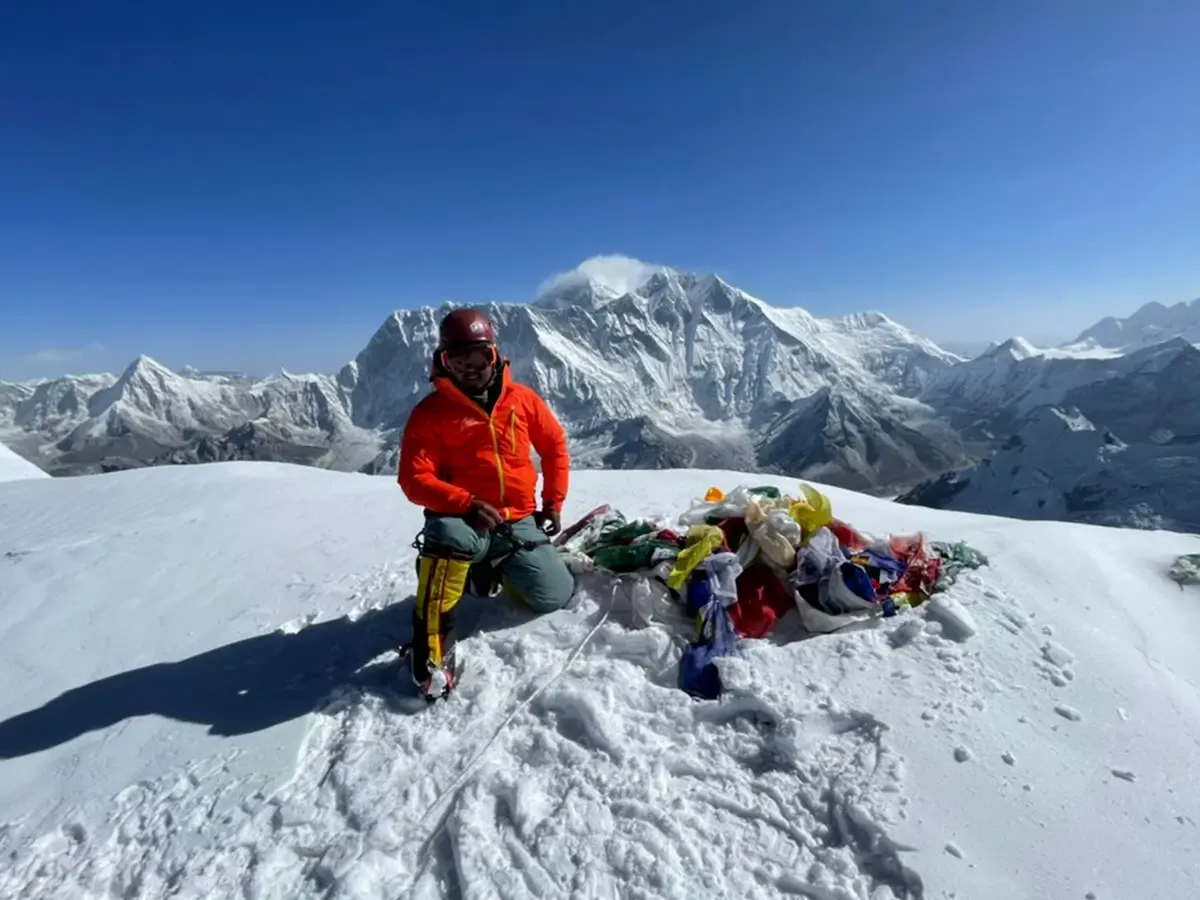
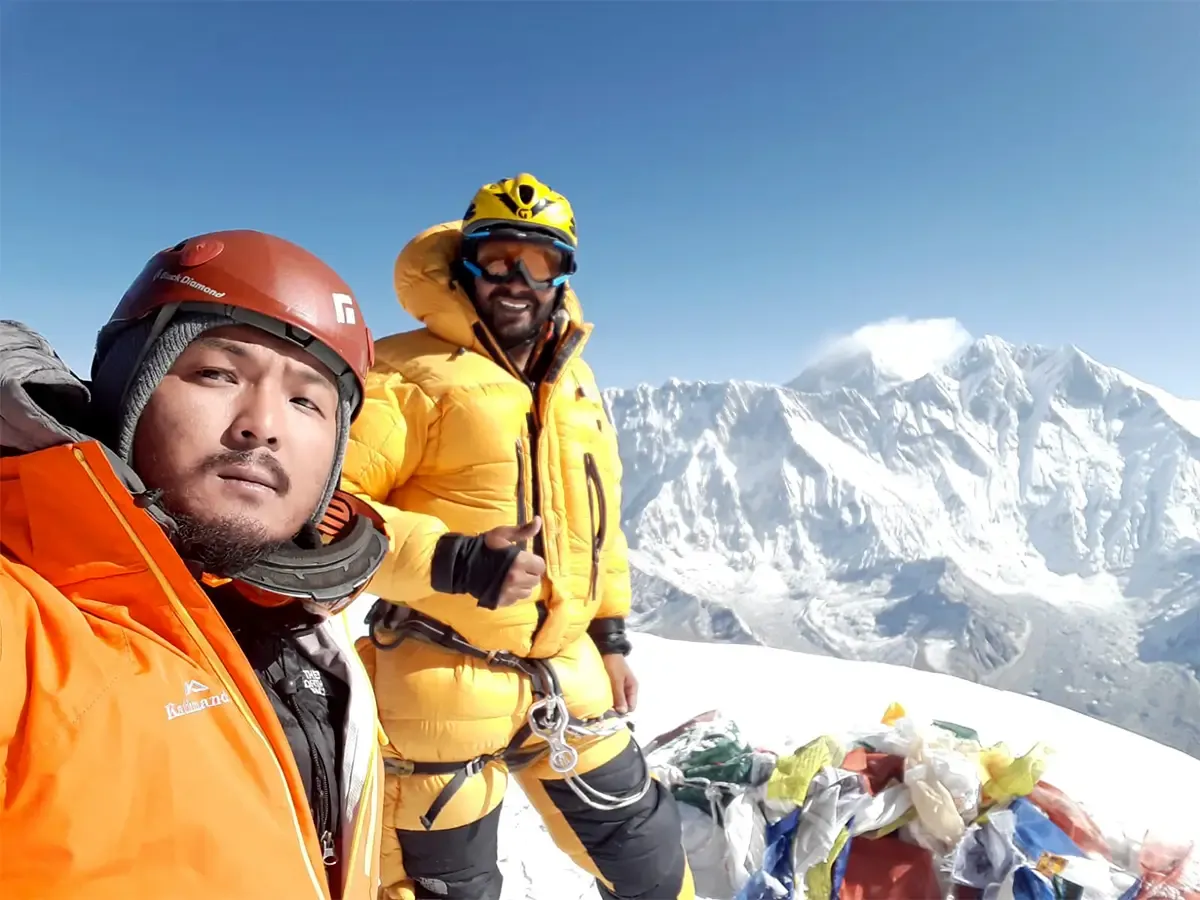
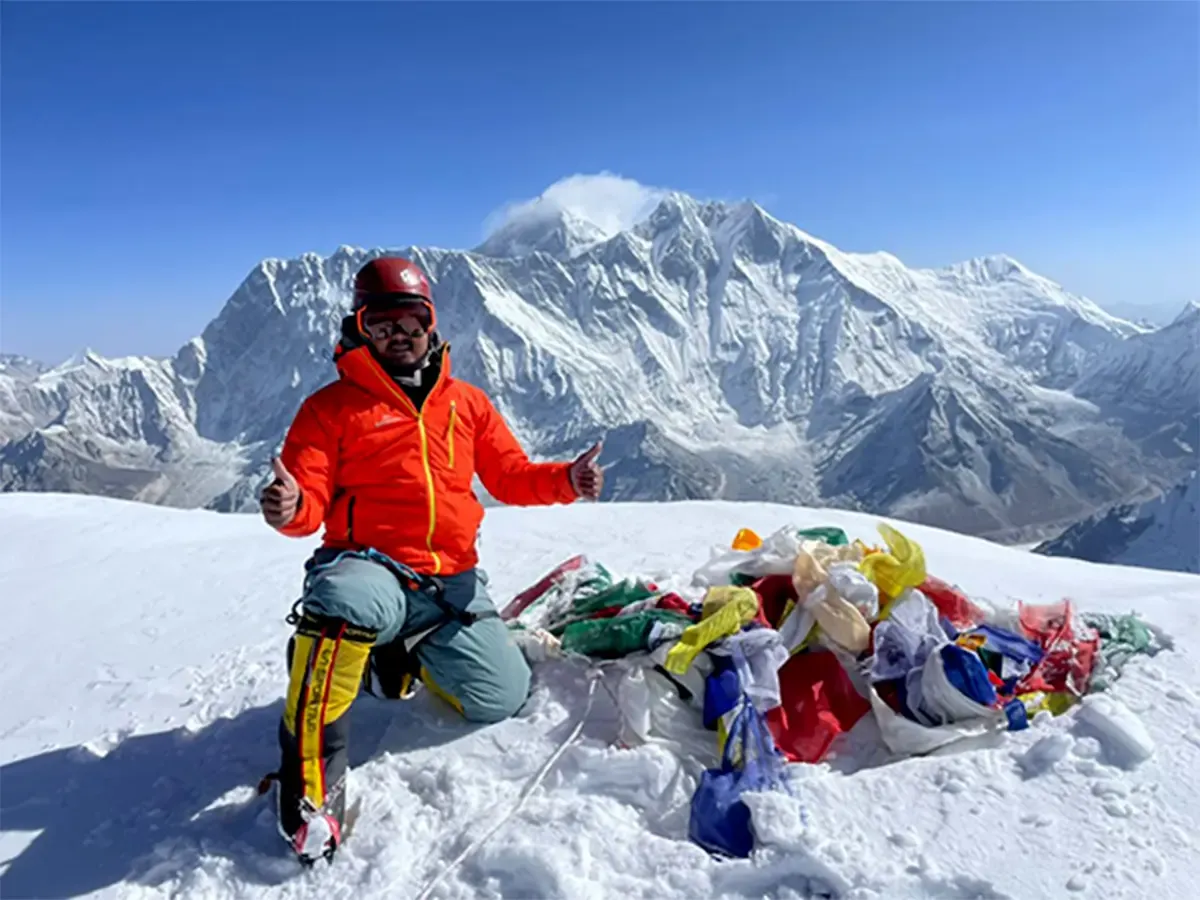
From high camp, we climb a glacier snout and cross a steep headwall that opens up the Island Peak summit. We will take pictures at the summit and enjoy the view.

Then, return to Island Peak Base Camp following the same route. We will have food and pack our bags to descend to Chhukung village to spend the night.

*We will fix the climbing route with ropes. We climb up and down the mountain using the ropes.

*At the Island Peak Base Camp, your leader will teach you climbing techniques and share route conditions.

Max Altitude: 6,189m (20,305ft)
Duration: 11-12 hours
Meals: Breakfast, lunch, and dinner
Accommodation: Lodge
Day 12

Contingency day in case of bad weather

We have a spare day for backup if we can't push to the Island Peak summit due to adverse weather. If everything goes as per our schedule, we will have one extra day to acclimatize at Ama Dablam Base Camp, or you can spend an extra day in Kathmandu.

Meals: Breakfast, lunch, and dinner
Accommodation: Tent
Day 13

Trek from Chhukung to Ama Dablam Base Camp

Descend from Chhukung village to Pangboche via Dingboche village. The trail then continues along the Imja Khola from Pangboche and gradually ascends to Ama Dablam Base Camp. The terrain will be steep and rocky. Our base camp crew will already be at Ama Dablam Base Camp to welcome us with warm tea and coffee.

Max Altitude: 4,600m (15,091ft)
Duration: 5-6 hours
Meals: Breakfast, lunch, and dinner
Accommodation: Tent
Day 14

Rest day and a worship ceremony at the Ama Dablam Base Camp

On this day, we will do a puja ceremony at the Ama Dablam Base Camp. Monks will do the rituals and pray mantras for our successful summit. We will take blessings from the mountain and valley gods for a safe and successful summit. After the puja, you will have the remaining day to rest and prepare for higher camps.

Meals: Breakfast, lunch, and dinner
Accommodation: Tent
Day 15

Ama Dablam Base Camp to Camp I

Leaving the Ama Dablam Base Camp, you will begin climbing along the southwest ridge. You reach Yak Camp (5,182 m/17,000 ft) in 2 to 3 hours of climbing from the base camp.

From here, you will walk on rocky terrain that stretches 100 meters and climb a simple fourth-class slab to reach Camp I. Camp I is situated on a 60º slope.

*There is not much space on Camp I, so we have to coordinate with other climbing parties. Only 6 to 7 tents can fit at Camp I.

Max Altitude: 5,700m (18,700ft)
Duration: 5-6 hours
Meals: Breakfast, lunch, and dinner
Accommodation: Tent
Day 16

Climb from Camp I to Camp II

From Camp I to Camp II, you will navigate the most technical section of Ama Dablam. Scramble up the mountain and trek along a simple fourth-class level stone edge around a few apexes and gendarmes.

You will acquire around 300 meters and 1000 vertical feet. The climbing route openness is enormous and has massive drop-offs on both sides of the bank.

Towards the level edge, you will climb the Yellow Tower (6 meters tall). It is considered French fourth class, British Severe, and North American YDS 5.5. Camp II is located over the Yellow Tower on the little edges.

Max Altitude: 5,950m (19,520ft)
Duration: 3 hours
Meals: Breakfast, lunch, and dinner
Accommodation: Tent
Day 17

Reach the summit of Ama Dablam and return to Camp II

*Many climbing parties make Camp III at 6,200 meters before the summit push. But we will only make Camp III if needed.

*Usually, climbers who couldn't push from Camp II to the Ama Dablam summit spend around 6 hours at Camp III before the summit push.

You will leave Camp II at 12:00 AM and climb over mixed ice and snow terrain. This section is fixed with ropes the entire distance. You will climb using headlamps and fixed ropes.

Cross the Mushroom Ridge at 6,150 meters. A little ahead from here, Camp III (6,200 m) is established. This spot has high torrential slide risks, so we spend as little time as possible here.

From Yellow Tower to Camp III, you will climb on a practically 55º slope for almost the entire way. As you climb ahead of Camp III, you will cross two simple pitches yet intense snow-ice (40º+) to the Dablam side.

After Dablam, you will reach the fluted day off/field (30-50º) that brings you to one of the world's finest summits at 6,812 meters. Enjoy your time at the summit and follow the same route back to Camp II.

Max Altitude: 6,812m (22,349ft)
Duration: 8+ hours
Meals: Breakfast, lunch, and dinner
Accommodation: Tent
Day 18-20

Contingency day in case of bad weather

We have included three contingency days in case we have to wait due to adverse weather, the summit window, or if you get sick. Again, if everything goes as per our plan, you will have extra days in Kathmandu.

Meals: Breakfast, lunch, and dinner
Accommodation: Tent
Day 21

Descend from Camp II to Ama Dablam Base Camp

Following the same route, descend from Camp II to Ama Dablam Base Camp. Pack your bags and do not leave any of your waste behind. We pack up everything and bring it down the mountain.

Max Altitude: 4,600m (15,091ft)
Duration: 5 hours
Meals: Breakfast, lunch, and dinner
Accommodation: Tent
Day 22

Trek from Ama Dablam Base Camp to Namche Bazaar

You will return to Namche Bazaar on this day. The trail descends to Pangboche village. From here, you will walk through rhododendron-covered hills to Tengboche village and descend to Phunki Tenga. Further, the trail continues to Namche Bazaar.

Max Altitude: 3,440m (11,286ft)
Duration: 7-8 hours
Distance: 19 km/ 12miles
Meals: Breakfast, lunch, and dinner
Accommodation: Lodge
Day 23

Trek from Namche Bazaar to Lukla

After breakfast, descend from Namche Bazaar to Lukla. Trek through densely forested hills and cross numerous suspension bridges along the way. The route is the same as before. You will pass by many Sherpa villages. From Phakding, it is an uphill climb to Lukla.

Max Altitude: 2,846m (9,337ft)
Duration: 8 hours
Distance: 13.6 km/8.3 miles
Meals: Breakfast, lunch, and dinner
Accommodation: Lodge
Day 24

Fly back to Kathmandu early in the morning & hotel transfer

You will return to Kathmandu on this day. Fly back to Ramechhap Airport early in the morning. Our team will pick you up from here and bring you back to the city.

Check in at your hotel and rest. Later, explore Thamel and visit tourist sites if you want. We highly recommend getting a body massage and spa to help you with the pain and exhaustion. Then go shopping.

Max Altitude: 1,400m (4,593ft)
Duration: 35 minutes flight
Meals: Breakfast
Accommodation: Hotel
Day 25

Transfer to the international airport for final departure

You will fly back to your home on this day. We will drop you off at the international airport.

Meals: Breakfast
Still Confused?
No worries - our team is ready to guide you every step of the way.

Altitude Chart

Cost Details

Includes

  • IFMGA or NMA certified guide leader
  • 1:1 Sherpa/Client ratio
  • Porters as per group size
  • Head chef and kitchen helpers
  • Government Liaison Officer expense and salary
  • 3-night stay in Kathmandu in a nice tourist-standard hotel
  • Lodge accommodation during trekking
  • Camping at Island Peak Base Camp
  • Camping at Ama Dablam Base Camp and higher camps
  • Breakfast in Kathmandu
  • Three meals a day during the trek and climbing period
  • Solo tent at Island Peak Base
  • Solo tent at Ama Dablam Base Camp and 2-person tent at higher camps
  • Full board service at base camp (including solar power for charging, daily weather forecast updates)
  • All trekking and climbing permits
  • 2 flights between Kathmandu and Lukla
  • Airport pickups and drop-offs as per the itinerary
  • 30 kg personal weight (for additional weight, clients can hire more porters)
  • Burners and expedition equipment
  • Walkie-talkie/Satellite phone
  • Supplemental oxygen cylinder for emergency use only (Personal O2 system can be arranged at $550 P/P with 1 bottle and 1 regulator system)
  • Basic first aid kit
  • Mountain Life Treks merchandise (down jacket, cap, buff, duffel bag)
  • Trip achievement certificate
  • All government taxes and service charges

Excludes

  • Nepal travel visa
  • Travel insurance
  • International flights to/from Kathmandu
  • Tip for porters and support crew (at least USD 150 per person)
  • Summit bonus (at least USD 500 per climbing Sherpa guide)
  • Lunch and dinner in Kathmandu
  • Bottled drinks and beverages (bar bills)
  • Climbing clothes and gear
  • Satellite phone bills
  • Departure taxes
  • Any expense not mentioned in our Cost Include section

 Note: If you return earlier from the Ama Dablam with Island Peak climbing due to sickness or any other issue, the money for unused service is nonrefundable. In addition to that, you have to bear any additional expenses such as transportation, accommodation, and meals in Kathmandu 

Ama Dablam with Island Peak Climbing Equipment Lists

For Ama Dablam with Island Peak climbing, you will need the following things:

Head
Head
  • Sun Cap
  • Wool/Fleece Hat
  • Balaclava
  • Neck Gaiter/High Neck
Hands
Hands
  • Hand Warmer
  • Lightweight Synthetic Liner Glove
  • Wind Stopper Fleece Gloves
  • Summit Gloves Heavy Gloves (Mitten)
Upper Body
Upper Body
  • Short-Sleeved Shirts/T-shirts
  • Lightweight Top/Thermo Coat
  • Midweight Top
  • Heavyweight Top
  • Synthetic or Fleece Jacket
  • Down Insulated Jacket
  • Windproof Jacket
  • Gore-Tex Jacket
Lower Body
Lower Body
  • Underwear
  • Lightweight Long Underpants
  • Midweight Long Underpants
  • Heavyweight Long Underpants
  • Trekking Pants
  • Down/Synthetic Insulated Pants
  • Gore-Tex Pants
  • Trekking & Climbing Socks
  • Summit Socks
Sun Stuffs
Sun Stuffs
  • Sunscreen (-50 Spf)
  • Lips Guard (-20/-50 Spf)
Toiletries
Toiletries
  • Hand Sanitizers & Hand Wash
  • Wet Tissues
  • Toilet Paper
  • Toothpaste
  • Toothbrush
  • Bath Soap
  • Shampoo
  • Moisturizers
  • Laundry Soap
  • Garbage Bag
Travel Documents
Travel Documents
  • Valid Passport
  • Valid Visa
  • 4 PP Size Photo
  • Insurance Paper (Medical & Rescue) & Contact Address
  • Family/Company Contact Number & Address
  • Credit Card
Climbing Equipment
Climbing Equipment
  • Climbing Helmet
  • Headlamp with Spare Batteries (Petzl/BD)
  • Summit Down Suits (Kailas/Marmot/T8K/The North Face)
  • Ice Axe Semi-technical
  • Harness
  • Carabiners (Both Lock & Unlock)
  • Ascenders/Jumar
  • Belay Device (ATC Guide/Figure of 8)
  • Assistant Rope
  • Tape Sling
  • Ice Screw
  • Summit Boot/One Sports Alpine Boot/G2SM
  • Crampons
  • Sleeping Bag: -30 +C to -40 +C
  • Thermarest Inflatable Mattress
  • Thermarest Cell Foam Mattress
  • Sun/Glacier Glasses UV Protection
  • Snow Goggle UV Protection
  • Extendable Trekking Poles (BD Alpine Flz)
Medical / First Aid
Medical / First Aid
  • Handy Plaster
  • Crack Bandage
  • Tincture
  • Lodine
  • Strepsils
  • Antibiotic
  • Paracetamol
  • Aspirin
  • Sinex
  • Anti-Diarrhea Capsule/Eldoper
  • Brufen/Ibuprofens
  • Diamox
  • Eye Drops
  • Dexamethasone Tablets
  • Zip-Lock Bags
  • Water Purification Tablets
Miscellaneous
Miscellaneous
  • Swiss Knife
  • Sandals
  • Lightweight Hiking/Trekking Boots
  • Camp Booties
  • Rucksacks (45 - 55 Ltr.)
  • 2 Duffel Bags
  • Water Bottles
  • Thermos/Flask
  • Pee Bottle
  • Pack Towel
  • Umbrella/Rain Coat
  • Spare batteries
  • Waterproof Stuff Sacks
  • Satellite Phone (if possible)
  • Solar chargeable power bank (optional)
  • Journal/Pen
  • Book/Board Game
  • Bars & Snacks

Essential Information

What do you eat during the Ama Dablam with Island Peak climbing?

In Kathmandu, we provide only breakfast. There are many incredible options for lunch and dinner in Kathmandu, so we do not want to limit our guests to a fixed menu.

During trekking, you will get breakfast, lunch, and dinner in a day. All meals will be provided as per the menu of the lodge. You can expect dishes like thukpa, momo, noodles, pasta, fried rice, rice with curry, eggs, porridge, dal bhat, pizza, burgers, Tibetan bread, soups, etc.

At Island Peak Base Camp and during the Ama Dablam climbing period, we will provide three heavy meals, snacks, and beverages. All the food will be strategically planned to provide ample energy and nutrients for the climb.

*We also have delicious snacks, pastries, and other food to keep our hearts full.

You will also have access to clean drinking water throughout the journey. Carry reusable water bottles that can hold warm water for at least 6 to 12 hours in a cold climate.

In the beverage, you will have different types of tea and coffee. You can also pack nuts, protein bars, energy drinks, electrolytes, and your favorite snacks for the expedition.

Hotel in Kathmandu

In Kathmandu, we will book a nice tourist-standard hotel or a 3-star hotel. You can choose a twin shared or single room as per your wish. The rooms will be spacious and equipped with all modern amenities, including WiFi, AC, TV, etc.

Lodging along the way

While trekking, you will spend nights in comfortable but simple lodges. These lodges offer twin shared rooms and a common washroom. Single rooms cost extra money, and private washrooms are limited to a handful of lodges.

*If you cannot adjust to the shared washroom or would like to have better accommodation, upgrade to the luxury lodge. Additional charges apply.

Accommodation during climbing

At Island Peak Base Camp, Ama Dablam Base Camp, and higher camps, you will spend nights in alpine tents. These tents are built to withstand extreme alpine environments.

You will get single sleeping tents at both base camps, but at Ama Dablam Camp I and Camp II, you have to share sleeping tents with another climber.

In addition to sleeping tents, we make separate kitchen tents, dining tents, and washroom tents at the base camps. At higher camps, we carry packed food and relieve ourselves in toilet bags.

Ama Dablam expedition's best season

The best season to climb Mount Ama Dablam is spring (March to May) and autumn (September to November). Autumn is much more popular than spring because of the warm weather. If you want fewer crowds, consider climbing in the spring season.

To climb Ama Dablam, you will need stable weather, long daylight hours, mild temperatures, stable snow conditions on the mountain, less avalanche risk, and adequate summit windows. Spring and autumn have all these conditions.

During summer/monsoon (June to August), climbing stops completely. Heavy rain and high avalanche risk make this season unsuitable for Ama Dablam with Island Peak climbing.

Likewise, winter (December to February) is the coldest time of the year. You have heard about winter summits on the Himalayan mountains, but these are only done by veteran mountaineers.

Communication

During trekking, you will find WiFi in many lodges, but the network is not stable, especially after Namche Bazaar. While climbing, there will be no network.

So, we use walkie-talkies to communicate between base camp, higher camps, and summits. Likewise, we use satellite phones to stay in touch with the office team and our families while climbing.

*You have to pay money to use a satellite phone to contact your family.

Charging

Charging is available in lodges along the trail. It will cost you a few bucks. During climbing, we provide a charging facility via our solar panels or batteries. Pack solar charger, spare batteries, and power banks for backup.

Hot showers and toilets

A hot shower is available at an extra charge in lodges. Not recommended after Namche Bazaar due to the cold. Use wet wipes to keep yourself clean.

During climbing, we do not shower. Regulating body temperature is not easy after a shower in the mountains. Hot water is available. We use it for a sponge bath.

Common toilets in the lodges. Some lodges may have private toilets at low elevations. During climbing, we make toilet tents at base camp and use disposable bags at higher camps.

Travel insurance for Island Peak and Ama Dablam climbing

Travel insurance covering helicopter evacuation up to 6,812 meters and medical treatment is a must for Ama Dablam with Island Peak climbing. Climbers have to buy suitable insurance by themselves (not covered in our package cost).

Physical and mental preparation for the Ama Dablam expedition

The physical and mental demands of the Island Peak and Mount Ama Dablam are beyond your imagination. It will push to the very edge of your strength and endurance.

On top of that, the harsh alpine environment will test your mental resilience. Therefore, you have to be physically and mentally ready for climbing both these mountains.

  • Strength training: Regular strength training is recommended. Focus on your legs, back, and core.
  • Cardio exercise: Cardio exercise will help you build your stamina and endurance. Activities like running, cycling, jogging, swimming, and stair climbing are recommended. Combine these activities in your workout routine.
  • High altitude training: Plan day hikes and short treks as per your availability. These activities are great for experiencing high altitude and also excellent for uphill climbing practice.
  • Walking: You cannot go wrong with regular long walks. We recommend walking with a 5 to 8 kg backpack on your back.
  • Flexibility and balance: The Himalayan terrain is rugged and steep. You need to balance on steep, rocky tracks during trekking and climbing. Exercises like yoga or pilates are great for flexibility and balance training. They also make your core strong.

Mental preparation:

While doing the above exercises and activities, you will be pushing yourself mentally slowly. In addition to that, we also want you to understand the challenges of climbing a mountain in the Himalayas.

The journey will be a once-in-a-lifetime thing, but it comes at an excruciating cost. Deep breathing, visualization, and flexibility to changes in plan and unexpected delays are needed. You have to be patient with the mountains.

Technical preparation for Mount Ama Dablam

For technical preparation for Mount Ama Dablam, you can climb easier mountains or join training centers or boot camps that teach you the basics of technical climbing.

  • You need to learn fixed rope skills that include clip, unclip, and pass anchors while maintaining balance and safety while climbing.
  • Ice climbing using front spikes of crampons while maintaining a stable body position and placing feet accurately.
  • Ice tool skills to protect yourself or others in case of any slip or unseen incident.
  • Rock climbing in boots. It includes precise foot placement, good balance, and controlled movement. Climbers should be comfortable going up and down wearing stiff boots and gloves while attached to fixed ropes. Very Important.
  • Rappelling and belaying.

Booking, payment, and cancellation 2026

To book the Ama Dablam with Island Peak climbing, send us a purchase of the trip via this page. Just buy the package as you shop normally. If you wish to make any changes to the trip, feel free to contact us.

We need a small booking deposit to confirm the trip. You can pay the rest of the amount upon arriving in Kathmandu. Note that full payment of the package must be made before the trip starts.

*If the amount received by us is less than what is supposed to be due to third-party charges, kindly settle the balance before the trip begins.

Canceling the trip will cost you a little cancellation charge. The cancellation fee depends on the date you send us the cancellation request.

Check more in detail about the booking and cancellation policy on our Terms & Conditions page.

Ama Dablam with Island Peak Climbing FAQs

Q1. Where is Mount Ama Dablam located?

Mount Ama Dablam's height is 6,812 meters. It is located in the eastern Himalayan range in Nepal. More specifically, Mt. Ama Dablam's location is in the Khumbu region (in the Sagarmatha National Park) near Mount Everest.

Q2. How difficult is it to climb Ama Dablam?

Ama Dablam is one of the highly technical mountains in the Himalayas. To climb Ama Dablam, you need advanced rock/ice climbing skills. The summit day involves intensive 10 to 14 hours of climbing on steep, exposed, and vertical terrain (pitches often reaching).

Q3. How long does it take to climb Ama Dablam?

Our Ama Dablam expedition duration is 25 days. It includes your arrival and departure from Kathmandu, trekking to Ama Dablam Base Camp from Lukla, and returning to Kathmandu.

Additionally, our Ama Dablam expedition itinerary also includes Island Peak climbing, which is great for acclimatization and warm-up for Ama Dablam.

Q4. Do I need prior climbing experience to climb Ama Dablam?

Yes, you need prior climbing experience to climb Ama Dablam. You need previous trekking peak climbing experience (above 6,000 meters) and knowledge of technical climbing.

Q5. What kind of technical skills are required for Ama Dablam?

To climb Ama Dablam, you need advanced mountaineering skills (Alpine AD+/D). It includes proficiency with fixed lines, steep rock scrambling, cold, vertical ice climbing, and high altitude conditions.

Climbers should know how to use ice axes and crampons on mixed terrain, abseiling/rappelling, and fixed-line management.

Q6. What is the success rate of the Ama Dablam expedition?

The success rate of the Ama Dablam expedition is 85-90%. Preparation, support, and weather play a huge role in the success of any mountain in the Himalayas, including Ama Dablam.

Q7. When is the best time to climb Ama Dablam?

October to mid-November is the most optimal time to climb Mount Ama Dablam. The weather is stable during this time, the sky remains clear, and calm winds are perfect for climbing Ama Dablam.

Likewise, April to May is also a climbing period in the Himalayas. However, the weather is slightly less stable.

Q8. How much does the Ama Dablam expedition cost?

The Ama Dablam expedition costs between USD 7,500 and USD 25,000 per person. The base camp service, itinerary, group size, and client-to-guide ratio determine the cost of the package.

Q9. Is Ama Dablam harder than Island Peak?

Yes, Ama Dablam is significantly harder than Island Peak. Mount Ama Dablam is an expedition peak with high technical challenges. However, Island Peak is a trekking peak suitable for beginners with no mountaineering skills.

Q10. Is Mount Ama Dablam harder than Mount Everest?

In terms of physical endurance, altitude, and extreme weather, Mount Everest is more challenging than Ama Dablam. However, Ama Dablam has more technically demanding sections than Mount Everest. Ama Dablam is great to prepare for Mt. Everest or 8,000-meter mountains in general.

Q11. What permits are required for the Ama Dablam expedition?

You will need the following permits for the Ama Dablam expedition:

  • Ama Dablam climbing permit from NMA (Nepal Mountaineering Association)
  • Sagarmatha National Park permit
  • Khumbu Pasang Lhamu Rural Municipality permit
  • Garbage Deposit Fee
  • Island Peak Climbing permit (because our Ama Dablam expedition includes climbing Island Peak too)
Q12. What is the acclimatization process during the Ama Dablam expedition?

During the Ama Dablam expedition, you will take an acclimatization break in Namche Bazaar and Dingboche. Then, you will climb Island Peak, which is excellent for acclimatization and also prepares you mentally for Ama Dablam.

You will also spend two nights at Ama Dablam Base Camp to acclimate and gear up before ascending to further camps. Our Ama Dablam expedition itinerary includes ample contingency days, which we utilize in case you do not feel well or the weather conditions change unexpectedly.

Q13. What is the death rate on Ama Dablam?

The death rate on Ama Dablam is 1% to 2%. Avalanches, falls, and altitude sickness are some of the major reasons for deaths on Mount Ama Dablam. Despite the risks, Ama Dablam remains one of the most popular mountains to experience excellent mountain climbing.

If you are well-prepared, knowledgeable about Himalayan weather and climate, and supported by a reliable climbing team, you can climb Ama Dablam confidently.

Q14. Do I need supplemental oxygen to climb Ama Dablam?

Climbers do not usually need supplemental oxygen to climb Ama Dablam. However, we carry supplemental oxygen cylinders for emergencies.

Q15. How many camps are there on Ama Dablam?

We make two camps above the Ama Dablam Base Camp- Camp I and Camp II. Camp III before the summit push is optional and only made if necessary.

Q16. What equipment is needed for Ama Dablam climbing?

You will use many climbing gears on Ama Dablam, such as a down suit (7,000-meter rated), ice axe, harness, ascender, stiff climbing boots, rigid steel crampons, carabiners, helmet, prusik loops, etc.

Q17. What is the weather like on Ama Dablam?

The weather on Ama Dablam rapidly shifts. The climate is very cold, and there is a risk of frostbite and hyperthermia if you are not well-insulated. The temperatures can drop below -20°C at higher camps.

Q18. Is Ama Dablam suitable for beginner climbers?

No, Mount Ama Dablam is not suitable for beginner climbers. If you are climbing for the first time, you are not legally eligible to climb Ama Dablam as your first mountain.

Q19. What is the summit success rate of Ama Dablam?

The Ama Dablam summit success rates range between 60-70%. Your expedition heavily relies on the weather. If the weather is on your side, you are most likely to reach the top of Ama Dablam and return safely.

Q20. Is there a risk of avalanches on Ama Dablam?

Yes, there is a risk of avalanches on Ama Dablam.

Q21. How crowded is Ama Dablam during peak season?

During the peak climbing seasons, you can see a good number of climbers on Ama Dablam. However, it doesn't affect your expedition in any way. Every group has its own pace and climbing schedule.

Although the summit windows are short and all groups push quite close to each other, you will still have an incredible mountain experience.

Q22. What kind of insurance is required for the Ama Dablam Expedition?

You will need comprehensive mountaineering insurance for the Ama Dablam expedition. It should explicitly cover high altitude climbing (up to 6,812 meters), emergency helicopter rescue/evacuation, and medical treatment.

Q23. Are there rescue services available on Ama Dablam?

Yes, rescue services are available on Ama Dablam. We work with the best rescue providers on big mountains like Ama Dablam in Nepal. Our rescue partners have numerous years of expertise in the extraction of climbers from Ama Dablam and many other mountains in Nepal.

Q24. Do I need to know about ice-climbing for Ama Dablam?

Yes, you need to know ice climbing to climb Ama Dablam. In fact, you should know advanced ice climbing to climb Ama Dablam.

Q25. How do climbers manage hygiene during the Ama Dablam expedition?

Showers at high altitude are not recommended due to cold weather. However, we will provide warm water to freshen up. Likewise, we set up toilets at Ama Dablam Base Camp and provide water.

It will not be your best toilet experience, but good enough. Hand sanitizer and wet wipes are crucial to keep yourself fresh. At Camp I and Camp II, we try to spend as little time as possible. For the toilet, you will use poop bags (WAG bags).

*As per new regulations, climbers have to bring their own waste (using WAG bags or a similar system) down from higher camps to prevent pollution.