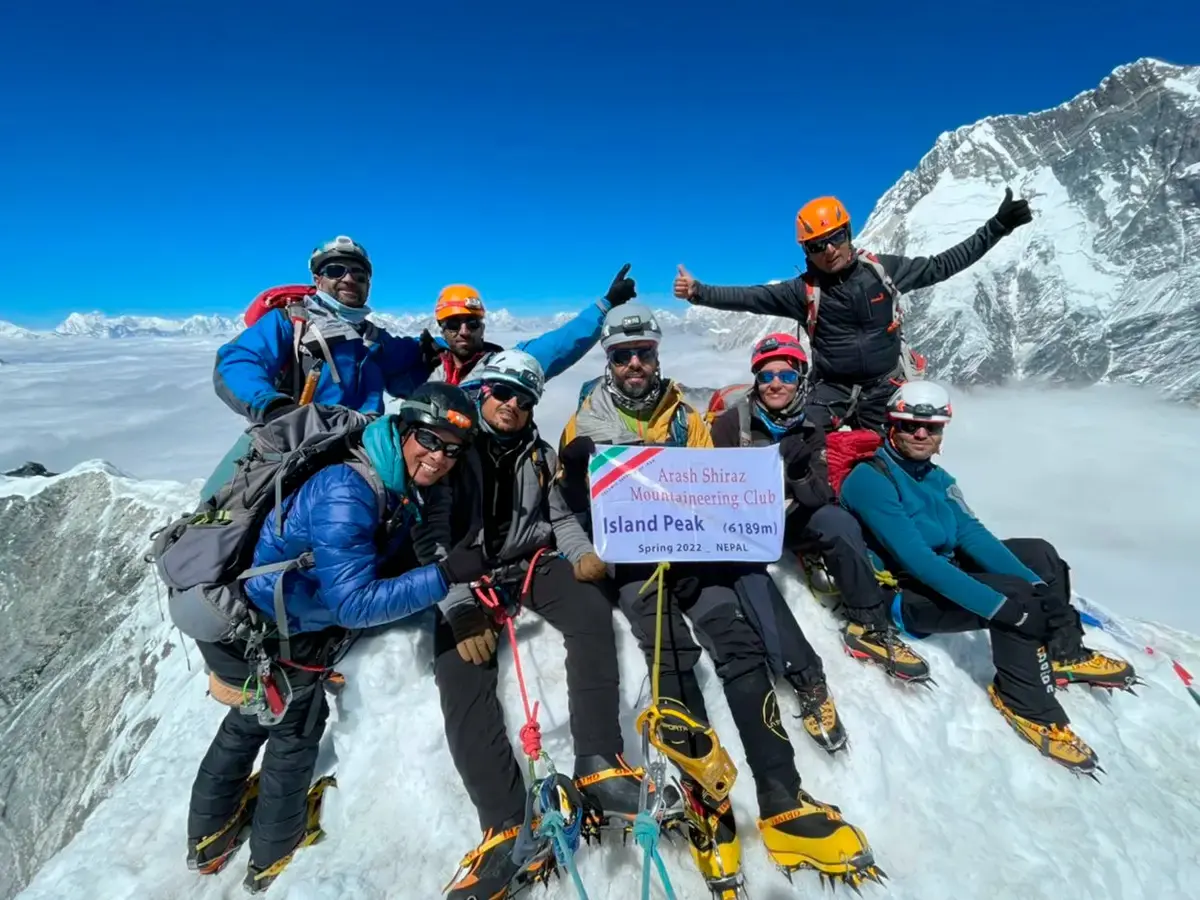
Island Peak Climbing

2 Reviews in TripAdvisor

Island Peak Climbing is one of the finest mountaineering adventures in the Himalayas. Whether you are a beginner climber or an experienced mountaineer, Island Peak offers an excellent climbing experience.

Duration
17 Days
Trip Grade
Moderate
Country
Nepal
Maximum Altitude
6,189 meters
Starts
Kathmandu
Ends
Kathmandu
Best Time
March to May (spring) and September to November (autumn)

Highlights

  • An adventurous trip in the Himalayas in Nepal
  • Climb Island Peak, one of the most stunning trekking peaks
  • Ideal for both beginner and experienced climbers
  • Explore the rich flora and fauna of Sagarmatha National Park while trekking to EBC
  • Spend nights in Sherpa villages and see the local culture and prices
  • Enjoy stunning mountain vistas and diverse landscapes during trekking
  • Witness a spectacular sunrise and Mt. Everest view from Kal Patthar
  • Go on side hikes during acclimatization breaks in Namche Bazaar and Dingboche village
  • Experience an exhilarating mountaineering on the way to the summit of Island Peak
  • One night in an alpine tent at Island Peak Base Camp
  • Pre-climbing training

Overview

Island Peak Climbing is one of the finest mountaineering adventures in the Himalayas. Whether you are a beginner climber or an experienced mountaineer, Island Peak offers an excellent climbing experience.

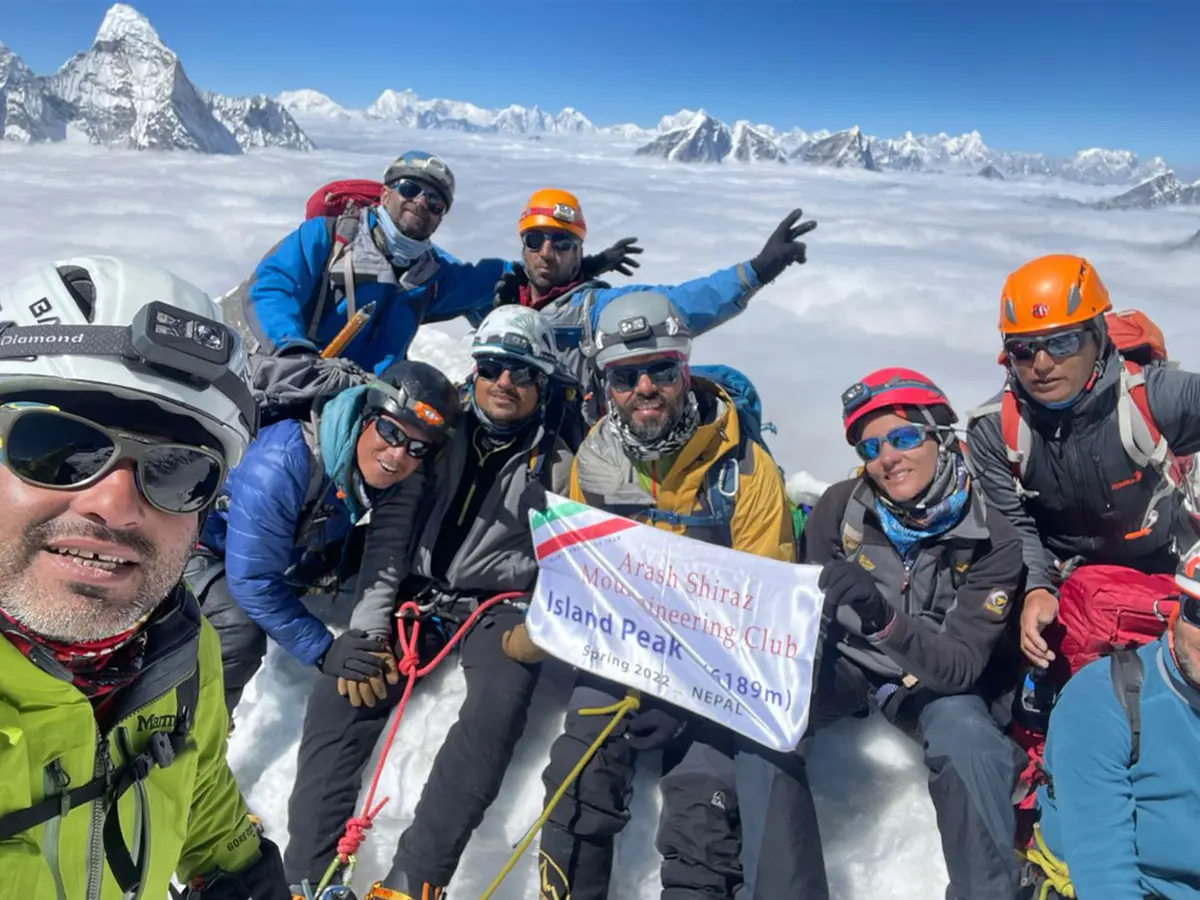
Island Peak, locally known as Imja Tse, is situated near Mount Everest in the Sagarmatha National Park in Nepal. This peak is an extension of Mt. Lhotse (the fourth-tallest mountain in the world). On the Island Peak Climbing, you will be very close to some of the tallest mountains on Earth.

Island Peak was first climbed in 1953 by the British Expedition team, who were preparing for the Mount Everest summit. They used Island Peak as a part of their acclimatization and technical training. So, climbing Island Peak makes you a part of early Mt. Everest expedition history.

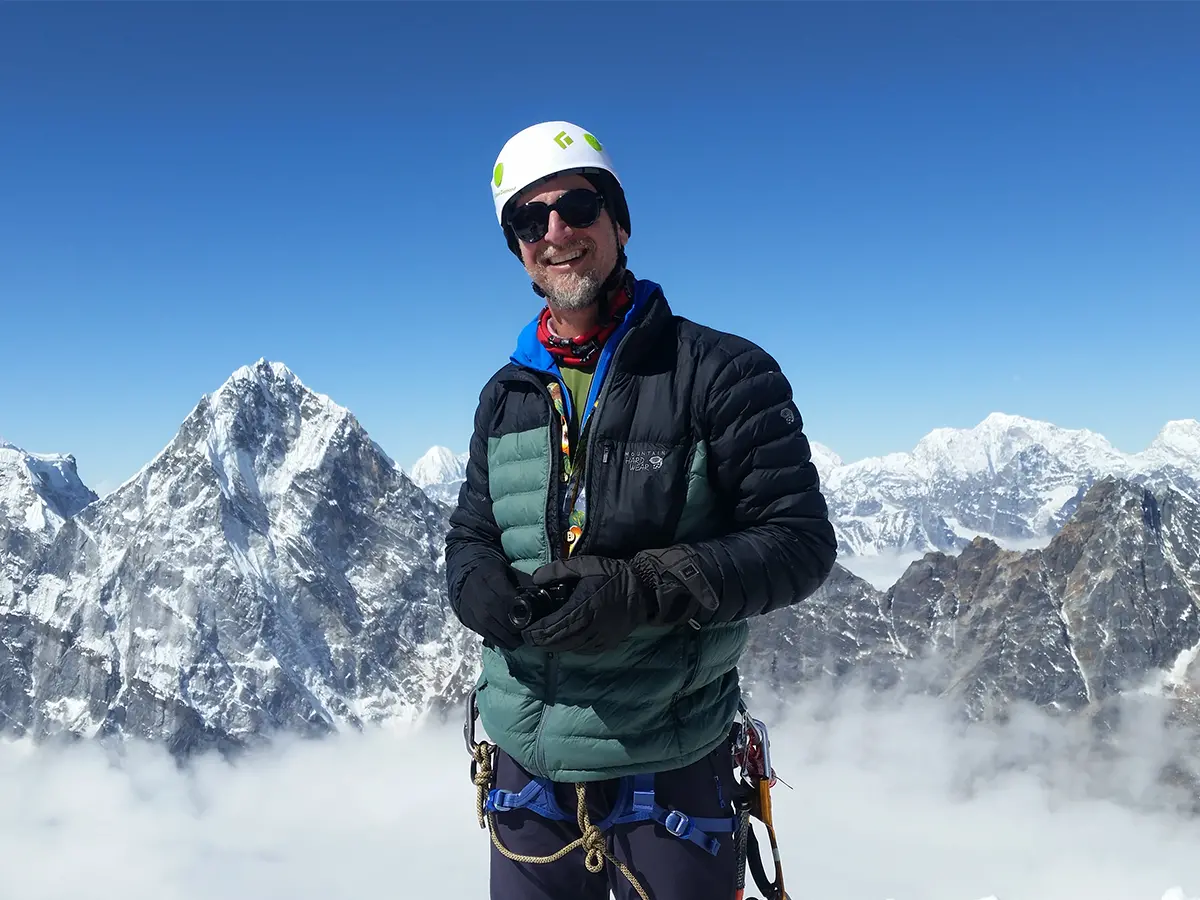
Similarly, the location of Island Peak makes it one of the prime choices for adventure enthusiasts. The Island Peak is located at the end of a high alpine valley. The Island Peak summit overlooks magnificent 7,000 and 8,000 meters mountains.

Apart from the climbing part, you will also enjoy an incredible trek during the Island Peak Climbing. The trip starts from Lukla and takes you to Everest Base Camp and Kala Patthar. You will follow the main EBC trail, enjoying the adventure and the cultural encounters.

The hike to EBC and Kala Patthar during the Island Peak Climbing is great for acclimatization. On top of that, it also enhances your overall journey and makes it even more memorable and special.

What to expect during the Island Peak Climbing 17 days?

Although we market Island Peak as a beginner-friendly mountain, it is not that easy to conquer it. Do not get fooled by the word beginner-friendly. You have to be physically and mentally well-prepared to climb Island Peak.

Anyone thinking of joining Island Peak Climbing must have strong fitness. Mountaineering skills are not required, but you have to be mountain smart. We will provide pre-climbing training before the summit push, during which you will learn basic climbing skills for Island Peak Climbing.

During trekking, you will spend nights in Sherpa villages. The accommodation will be simple lodges, but they are clean and comfortable. While climbing, you will spend a night in an alpine tent at Island Peak Base Camp.

You will hike for around six hours every day. The day starts at around 7:00 AM, followed by a delicious breakfast and a long walk to the next village. You will spend 12 days trekking and 2 days climbing.

*If you are an experienced climber or do not want to trek to Everest Base Camp, let us know. We will send you the Island Peak Climbing itinerary without EBC.

Island Peak Climbing course

Island Peak Base Camp:

We make the Island Peak Base Camp at 5,240 meters. We will train for the climb here. Our guide will introduce you to climbing gear, share the climbing plan, and explain the route conditions.

The Summit Push

From Island Peak Base Camp, we push for the summit push. Gearing up for the summit push correctly is important. Our guide will help you with that. At around 12:30 AM, we’ll wake up and prepare to leave the base camp. By 1:30 AM, we will leave Island Peak Base Camp and start climbing across mixed rocky terrain. 

  • The Grey Rock: Traveling through gullies and steep rocky terrain, you will come across some exposed sections. It is important to maintain your balance as you pass through the Grey Rock. It is a steep ascent all the way up to the crampon point.
  • The Traverse to Crampon Point: It is a short climb to Crampon Point. You will climb on an exposed rocky ridge with fixed lines in place. For further safety, we use a harness. Your foot placement matters a lot. Hold onto the rocks as you move across the ridge. Stay on the left side of the ridge.
  • Crampon Point: You will reach the Crampon Point after two hours of steep climbing. From here onwards, you need to use an ice axe for further climbing.
  • The Glacier Traverse: The next section is the glacier traverse. You will use fixed lines and additional safety lines for ladder crossings. Once you cross the undulating glacier, you will mostly climb a large snow slope that leads to the headwall.
  • The Headwall and Island Peak Summit: The headwall section is also fixed by the ropes that we use to climb it. We need to be fast on this section because ice continuously melts. It will take around an hour and thirty minutes to cross this section that leads to the Island Peak summit.

Getting back down

Reaching the summit is only halfway. Most accidents happen while descending when climbers lose their attention and get careless. So, you have to be focused while descending from the mountains.

The route will be the same. You will climb down the headwall and follow the same route all the way down to Island Peak Base Camp.

Island Peak Climbing fitness preparation

  • Take the Island Peak Climbing seriously and follow a strict workout plan to improve your strength, stamina, and endurance.
  • You need to form a training plan that is doable for you and is designed specifically to your fitness requirements.
  • Include strength and endurance training in your workout plan.
  • Gradually increase cardio training sessions. It is best to improve your stamina and endurance. You have to train at least 4 to 5 times a week.
  • During training, try maintaining your heart rate in your endurance zone. In addition to that, include long hikes or walks at least once a week.

Island Peak Climbing cost and booking 2026

Our Island Peak Climbing cost is the most satisfactory in the market. You can do Island Peak Climbing with us at just USD XXXX per person. Booking your seat in our fixed departure for Island Peak Climbing will let you enjoy a special discount, too.

We also take private bookings for Island Peak Climbing. If you are ready to experience one of the craziest adventures in the Himalayas and conquer a mountain, book your seat now.

For any further enquiries regarding the Island Peak Climbing price, you can talk to our team anytime. Bookings are open for Island Peak Climbing 2026 spring and autumn departures.

Why climb Island Peak with Mountain Life Treks?

You need a reliable climbing part to climb the Island safely and successfully. We, Mountain Life Treks, provide guidance in each step of the trip.

By choosing us for the Island Peak Climbing, you can take advantage of our several years of expertise and deep knowledge of peak climbing in Nepal.

You will get access to our professional team and certified mountain guides by joining Island Peak Climbing 17 days with us. Our Island Peak Climbing cost and service are unbeatable in the market.

There are also many added benefits of climbing Island Peak with us, such as:

  • Enjoy a very well-managed trek service
  • Best Island Peak Climbing price
  • Full base camp service
  • Team leader who has climbed Island Peak several times before
  • Friendly porter and base camp support crew
  • No hidden fees
  • Hassle-free trip
  • Airport pick-ups and drop-offs as per the itinerary
  • Free duffel bags to use during the trek
  • Assistance in renting climbing gear at the best price
  • 24/7 service
  • Flexible itinerary

Island Peak Climbing Itinerary

Day 1

Kathmandu arrival and transfer you to the hotel

Mountain Life Trek's team will welcome you at the airport on your arrival day. We take care of your airport transfer. Our team will drop you off at the hotel in a private vehicle. If you need any help, feel free to ask our representative.

Get some rest and freshen up. We will meet later in the day for the trek briefing. You can ask your queries during the briefing. After that, explore the shops in Thamel and buy all the things that you need for the trek.

*Sleep early because you will leave Kathmandu at around 1:00 AM to drive to Ramechhap Airport for the Lukla flight (only in spring and autumn).

Accommodation: Hotel
Day 2

Early morning flight from Kathmandu to Lukla airport and trek to Phakding (2,610 m/8,563 ft)

Breakfast, lunch & dinnerBegin the day at around midnight and drive to Ramehchhap Airport. The weather remains stable in the morning, so Lukla flights are mostly operated in the early morning hours.

It takes 4 to 5 hours to drive to Ramechhap Airport from Kathmandu. So, you have to leave the city at midnight to reach the airport on time to catch the Lukla flight. After the short flight, you will land at Lukla. Our porters will join you in Lukla.

You will trek with them to Phakding village. The first day of walking is pretty easygoing. Descend through forested hills, crossing suspension bridges over the Dudh Koshi River on the way.

*In spring (March to May) and autumn (September to November), the Lukla flights are operated from Ramechhap Airport.

*In summer/monsoon (June to August) and winter (December to February), the Lukla flights are operated from Kathmandu Airport.

Max Altitude: 2,846m (9,337ft)
Duration: 35 minutes flight & 3 hours trek
Distance: 6.2 km/3.8 miles
Meals: Breakfast, lunch & dinner
Accommodation: Lodge
Day 3

Trek from Phakding to Namche Bazaar

From today, major walking begins. You will leave Phakding village and trek to Namche Bazaar. It will be a long but adventurous hike. The trail goes through rhododendron forests and crosses many suspension bridges on the way.

Similarly, you will pass by small villages and see the locals' ways of life. The permits are registered at a police check post in Monjo. The final ascent to Namche Bazaar is steep.

*You will cross the iconic Tenzing Hillary Suspension Bridge on this day.

Max Altitude: 3,440m (11,286ft)
Duration: 6-7 hours
Distance: 7.4 km/4.6 miles
Meals: Breakfast, lunch & dinner
Accommodation: Lodge
Day 4

Acclimatization in Namche Bazaar: hike to Hotel Everest View

Namche Bazaar will welcome you with a bustling market and a delightful environment. Here, you will take an acclimatization break, which is crucial to avoid altitude sickness. You can buy or rent trekking/climbing gear here as well, but the prices will be higher than in Kathmandu.

Hike to Hotel Everest View early in the morning. It will be a bit of a tough hike, but you will get to witness the first clear view of Mt. Everest along with Mt. Lhotse, Mt. Nuptse, and Mt. Ama Dablam.

After the hike, you will come back to Namche Bazaar to spend the night and the rest of the day. Take your time to explore the village. You can visit a pub here, too. It will be a memorable experience. There are also museums around the village that you can visit.

Max Altitude: 3,790m (12,434ft)
Duration: 4-5 hours
Meals: Breakfast, lunch & dinner
Accommodation: Lodge
Day 5

Trek from Namche Bazaar to Tengboche village

The trail ascends from Namche Bazaar to Tengboche village. It will be a lover's walk alongside lush hills. Descend to Phungi Thenga and ascend to Tengboche from here.

Tengboche has the biggest monastery in the Khumbu region. Likewise, the view of Mt. Everest, Mt. Lhotse, and Mt. Ama Dablam is breathtaking from here.

Max Altitude: 3,860m (12,664ft)
Duration: 5-6 hours
Distance: 9.2 km/5.7 miles
Meals: Breakfast, lunch & dinner
Accommodation: Lodge
Day 6

Trek from Tengboche to Dingboche

Tengboche to Dingboche is another excellent walk through varying altitudes and landscapes. Follow a downhill route through forested hills to Deboche.

The trail descends all the way down to the Imja Khola Valley Floor. Cross a suspension bridge and ascend through Pangboche village. As you ascend further, the valley opens up. You will pass by small settlements and terraced fields.

Max Altitude: 4,410m (14,468ft)
Duration: 6 hours
Distance: 12 km/7.45 miles
Meals: Breakfast, lunch & dinner
Accommodation: Lodge
Day 7

Acclimatization day- hike to Nangkartshang Peak or Chhukung Valley

For the hike, visit Nangkartshang Peak or Chhukung Valley. Both hikes are excellent and offer superb mountain panoramas. Today, you will see many incredible mountains such as Makalu, Cho Oyu, Everest, Ama Dablam, Cholatse, etc. Spend the remaining day back in Dingboche village.

Duration: 4-5 hours
Meals: Breakfast, lunch & dinner
Accommodation: Lodge
Day 8

Trek from Dingboche to Lobuche via Dughla Pass (4,830 m/15,846 ft)

Leaving Dingboche village, you will ascend to a ridge. The trail then ascends to Dhugla (pass), following the Khumbu Glacier moraine. You will then trek past memorial chortens built in memory of fallen climbers on Mt. Everest. Finally, you will reach Lobuche village. 

Max Altitude: 4,940m (16,207ft)
Duration: 6-7 hours
Distance: 8.5 km/5.2 miles
Meals: Breakfast, lunch & dinner
Accommodation: Lodge
Day 9

Trek from Lobuche to Everest Base Camp via Gorak Shep (5,164 m/16,942 ft) and back to Gorak Shep for a night's stay

From Lobuche village, you will hike to Gorak Shep. The trail goes along the Khumbu Glacier lateral moraine. The terrain is rocky and covered with boulders.

In Gorak Shep, leave the big duffel bags and trek with your day pack to Everest Base Camp. It will be two hours of ascending.

EBC will welcome you with stunning landscapes and a captivating view of the Khumbu Icefall. After exploring the base camp, return to Gorak Shep to spend the night.

Max Altitude: 5,364m (17,598ft)
Duration: 8 hours
Distance: 15 km/9.32 miles
Meals: Breakfast, lunch, and dinner
Accommodation: Lodge
Day 10

Hike to Kala Patthar early in the morning and trek down to Dingboche village (4,410 m/14,470 ft)

Wake up before sunrise and hike to Kala Patthar. In around two hours of climbing, you will reach one of the famous viewpoints to see a breathtaking panorama of Mouth Everest.

After enjoying mountain views and sunrise from Kala Patthar, return to Gorak Shep and descend to Dingboche following the same route.

Max Altitude: 5,545m (18,192ft)
Duration: 6 hours
Distance: 16.2 km/10 miles
Meals: Breakfast, lunch & dinner
Accommodation: Lodge
Day 11

Trek from Dingboche to Chhukung (4,730 m/15,518 ft)- optional hike to Chhukung Ri (5,546 m/18,196 ft)

After the long walk yesterday, the short hike to Chhukung village gives you ample time to rest and recover. If you feel like walking, visit Chhukung Ri.

Max Altitude: 5,546m (18,195ft)
Duration: 4 hours
Distance: 5.3 km/3.1 miles
Meals: Breakfast, lunch, and dinner
Accommodation: Lodge
Day 12

Climb to Island Peak Base Camp

The climbing phase begins today. Till now, you have been trekking to acclimatize for summiting Island Peak. From Chhukung village, the trail climbs to Island Peak Base Camp. Hike past the Imja River and ascend to the Lhotse Glacier.

Further, following a winding route along a riverbed, you will climb to Island Peak Base Camp. Our support team will already be there with tents and warm meals all ready to welcome us.

Max Altitude: 5,240m (17,191ft)
Duration: 4-5 hours
Distance: 5 km/3.1 miles
Meals: Breakfast, lunch & dinner
Accommodation: Camp
Day 13

Climb Island Peak Base Camp - start ascending towards Island Peak summit around 12 AM and return to Chhukung to spend the night

The summit push to Island Peak starts at around 12 AM. You will have a warm, big breakfast and gear up for climbing. Following a narrow passage, you will climb to the high camp.

We rest here before the final push to the Island Peak summit. After high camp, climb a glacier snout and cross a steep headwall that will lead to the summit.

Enjoy a few minutes at the summit, enjoying the view, and descend back to base camp. Get some rest and walk down to Chhukung village to spend the night.

*The route will be fixed with ropes. You will use the ropes to climb up and down the mountain under the guidance of your team leader.

Max Altitude: 6,189m (20,305ft)
Duration: 11-12 hours
Meals: Breakfast, lunch, and dinner
Accommodation: Lodge
Day 14

Trek from Chhukung to Namche Bazaar

Following the same trail, descend to Dingboche village. Then walk down to Pangboche village. The trail further ascends to Tengboche village via Deboche. From here, you will walk downhill to Phungi Thenga and gradually ascend to Namche Bazaar.

Max Altitude: 3,440m (11,286ft)
Duration: 7-8 hours
Distance: 27 km/16.7 miles
Meals: Breakfast, lunch, and dinner
Accommodation: Lodge
Day 15

Trek from Namche Bazaar to Lukla

From Namche Bazaar to Lukla, you will follow the same route through rhododendron-covered hills and several suspension bridges. Descend all the way down to Phakding village and ascend along the Dudh Koshi River to Lukla.

Max Altitude: 2,846m (9,337ft)
Duration: 7-8 hours
Distance: 13.6 km/8.4 miles
Meals: Breakfast, lunch, and dinner
Accommodation: Lodge
Day 16

Morning flight back to Kathmandu from Lukla airport & hotel drop

A thrilling flight will bring you back to Kathmandu. As per your landing location, our team will be waiting for you to escort you to the hotel in Thamel. Spend the rest of this day as you wish. Resting, shopping, exploring tourist sites, and trying local food.

Max Altitude: 1,400m (4,593ft)
Duration: 35 minutes flight
Meals: Breakfast and farewell dinner
Accommodation: Hotel
Day 17

Final departure

Prepare to leave Kathmandu. Our team will drop you off at the international airport.

Meals: Breakfast only
Still Confused?
No worries - our team is ready to guide you every step of the way.

Altitude Chart

Cost Details

Includes

  • Airport pick-ups and drop-offs by private four-wheeler
  • 2 Lukla flights
  • 2 nights in a 3-star hotel in Kathmandu (twin-sharing accommodation)
  • 13 night lodge accommodation during the trek
  • 1 night camping at Island Peak Base Camp
  • Three meals (breakfast, lunch, and dinner with tea/coffee and seasonal fruit) a day during the trek
  • Climbing equipment such as climbing rope, ice screws, and snow bars
  • Camping equipment such as tents, mattresses, tables, chairs, fuel, etc
  • Licensed Nepali guide (NMA certified) and porter (one porter for one climber)
  • Assistant porters for base camp support
  • Accommodation, food, allowance, and high altitude insurance for the guide and porter
  • Sagarmatha National Park permit
  • Khumbu Pasang Lhamu Rural Municipality permit
  • Island Peak Climbing permit
  • Garbage deposit
  • Down jacket, trekking poles, and a four-season sleeping bag to use during the trek
  • Exclusive first-aid kit, including oximeter
  • Helicopter evacuation arrangement (expenses should be covered in your travel insurance)
  • Trip achievement certificate
  • All government taxes and service charges

Excludes

  • Nepal travel visa fee (USD 30 for 15 days, USD 50 for 30 days, and USD 125 for 90 days)
  • International flight to/from Kathmandu
  • Travel insurance (must cover helicopter evacuation and medical bills)
  • Lunch and dinner in Kathmandu
  • Trekking/climbing clothes and gear
  • Shopping and souvenirs
  • Summit bonus for guide and porters (mandatory)
  • Bar bills, water bottles, and other beverages
  • Personal expenses during the trek (like WiFi, charging, and hot showers)
  • Departure taxes
  • Any expenses not mentioned in our cost include section

Island Peak Climbing Equipment Lists

For the Island Peak Climbing, you will need the following things:

Head
Head
  • Sun Cap
  • Wool/Fleece Hat
  • Balaclava
  • Neck Gaiter/High Neck
Hands
Hands
  • Lightweight Synthetic Liner Glove
  • Wind Stopper Fleece Gloves
  • Heavy Gloves (Mitten)
Upper Body
Upper Body
  • Short-Sleeved Shirts/T-shirts
  • Lightweight Top/Thermo Coat 
  • Midweight Top
  • Synthetic or Fleece Jacket
  • Down Insulated Jacket
  • Gore-Tex Jacket
Lower Body
Lower Body
  • Underwear
  • Lightweight Long Underpants 
  • Midweight Long Underpants
  • Trekking Pants
  • Synthetic Insulated Pants
  • Gore-Tex Pants
  • Trekking & Climbing Socks
  • Summit Socks
Toiletries
Toiletries
  • Hand Sanitizers & Hand wash
  • Wet Tissues
  • Toothpaste
  • Toothbrush
  • Bath Soap
  • Shampoo
  • Moisturizers 
  • Laundry Soap
  • Garbage Bag
Travel Documents
Travel Documents
  • Valid Passport
  • Valid Visa
  • 4 PP Size Photo
  • Insurance Paper (Medical & Rescue) & Contact Address
  • Family/Company Contact Number & Address
  • Credit Card
Climbing Equipment
Climbing Equipment
  • Climbing Helmet
  • Headlamp with Spare Batteries (Petzl/BD)
  • Ice Axe Semi-technical
  • Harness
  • Carabiners (Both Lock & Unlock)
  • Ascenders/Jumar
  • Belay Device (ATC Guide/Figure of 8)
  • Assistant Rope
  • Tape Sling
  • Ice Screw
  • Summit Boot/G2SM
  • Crampons
  • 1 Sleeping Bag: -30 +C to -40 +C
  • Thermarest Cell Foam Mattress
  • Sun/Glacier Glasses UV Protection
  • Snow Goggle UV Protection
  • Extendable Trekking Poles (BD Alpine Flz)
Medical / First Aid
Medical / First Aid
  • Sunscreen (SPF 50+++)
  • Lips Guard (with SPF)
  • Water Purification Tablets
  • Baby Wipes or Wet Towels
  • Handy Plaster
  • Crack Bandage
  • Tincture
  • Lodine
  • Strepsils
  • Antibiotic
  • Paracetamol
  • Aspirin
  • Sinex
  • Anti-Diarrhea Capsule/Eldoper
  • Brufen/Ibuprofens
  • Diamox
  • Eye Drops
  • Zip-Lock Bags
Miscellaneous
Miscellaneous
  • Swiss Knife
  • Sandals
  • Lightweight Hiking/Trekking Boots
  • Camp Booties
  • Rucksacks (45 - 55 Ltr.)
  • 1 Duffel Bag
  • Water Bottles
  • Thermos/Flask
  • Pee Bottle
  • Pack Towel 
  • Umbrella/Rain Coat
  • Spare batteries
  • Waterproof Stuff Sacks
  • Satellite Phone (if possible)
  • Solar chargeable power bank (optional)
  • Journal/Pen
  • Book/Board Game
  • Bars & Snacks

Essential Information

Island Peak Climbing difficulty

As per the trekking peak standards, the Island Peak Climbing difficulty is rated Alpine PD+ by the Nepal Mountaineering Association (NMA). It means it is a beginner-friendly trekking peak with little technical difficulty.

The Island Peak Climbing route has steep glacier slopes, exposed ridges, and a handful of entry-level technical challenges, which is great for first-time climbers.

The major challenge of Island Peak Climbing is high-altitude walking. You will climb above 6,000 meters from sea level, which is not an easy thing. With that, you also have to make sure to acclimatize to decrease the altitude sickness risk.

The higher you ascend, the lower the oxygen level will get. It will make every step demanding. You will not only be physically challenged but also mentally. So, it is important that you are fit and have previous high altitude experience for Island Peak Climbing.

Altitude sickness during the Island Peak Climbing

Our acclimatization strategy to avoid altitude sickness during the Island Peak Climbing is to hike to Everest Base Camp and Kala Patthar. We also have two rest days in our Island Peak Climbing itinerary in Namche Bazaar and Dingboche.

This will be more than enough for the majority of climbers to adjust to high altitude before pushing towards Island Peak Base Camp. On top of that, we also monitor our climbers' health during hiking and customize the acclimatization plan accordingly.

How to avoid altitude sickness:

  • Be aware of the early signs of altitude sickness and get medicine on time
  • Ascend slowly and do not rush
  • Listen to your body and keep it hydrated
  • Avoid alcohol or smoking
  • Eat carbohydrate-rich food to maintain your energy and get ample sleep

Symptoms:

  • Headache
  • Breathlessness
  • Diziness
  • Nausea
  • Vomiting
  • Loss of appetite
  • Insomnia

Travel insurance for the Island Peak Climbing

Your first step after booking the Island Peak Climbing trip with us should be getting well-covered travel insurance. It should cover helicopter evacuation and medical bills.

You need travel insurance that is eligible for peak climbing in Nepal. So, double-check the clauses. Note that without travel insurance with required coverage, you will not be allowed to join us for Island Peak Climbing.

We need the travel insurance documents before the trip begins. In the event of any unseen emergency, we use the documents provided by you to arrange rescue.

Island Peak Climbing permit

The Island Peak Climbing requires the following permits:

  • Sagarmatha National Park permit
  • Khumbu Pasang Lhamu Rural Municipal Entry Permit
  • Island Peak climbing permit (issued by NMA)
  • Garbage deposit

*Our Island Peak Climbing package includes all these permit fees.

Accommodation during the Island Peak Climbing

In Kathmandu, we provide accommodation in a 3-star hotel. Both single and shared rooms are available.

During trekking, you will spend nights in simple lodges. Twin shared rooms are booked. Single rooms cost extra money. Washrooms are common in simple lodges, and services like charging, WiFi, and hot showers cost extra money.

During Island Peak Climbing, you will spend a night in a tent at Island Peak Base Camp. We provide all camping essentials, along with a comfortable mattress and pillow, to each climber.

*Our Island Peak Climbing package cost does not include personal expenses such as WiFi fee, charging fee, and hot showers during the trek.

Food during the Island Peak Climbing

You will get three meals a day during the Island Peak Climbing. The food will be delicious. You can carry your personal sacks for the journey too. In Kathmandu, you will only get breakfast, so budget for lunch and dinner.

The meal options on the Island Peak Climbing route are quite good. You will follow the well-established EBC route before climbing Island Peak. The meal options are excellent on this route.

During climbing, we will cook the meals by ourselves. Our kitchen staff will take care of cooking the meals. Similarly, you will get boiled drinking water throughout the journey.

Island Peak Climbing best time

Spring (March to May) and autumn (September to November) are the safest times to climb Island Peak. Not only are the summit rates higher in these two seasons. The weather in the Himalayas is stable, and the climbing route is also in good condition.

As a significant part of the Island Peak Climbing trip includes trekking as well, the spring and autumn seasons will be best for that. June to August is not a good time for Island Peak Climbing. Weather challenges are very high, and summit windows are low.

Winter ascents are possible, but you have to wait for the stable weather and summit window. Winter is also the coldest time of the year, so you have to be well-packed for the journey

Island Peak Climbing FAQs

Q1. Where is Island Peak (Imja Tse) located?

The Island Peak, also known as Imja Tse, is located in the Sagarmatha National Park, in the eastern Himalayan range in Nepal. The peak is located close to Mount Everest. In fact, the Island Peak is an extension of the Lhotse Shar ridge.

Q2. Is Island Peak suitable for first-time climbers?

Yes, Island Peak Climbing is suitable for first-time climbers with strong fitness and previous high-altitude experience.

Q3. How difficult is Island Peak Climbing?

Climbing Island Peak is extremely physically and mentally challenging. On the good note, the technical challenges are low on the Island Peak, which makes it a good option for beginner climbers.

Q4. Is Island Peak harder than Mera Peak?

The technical challenges are a bit higher on the Island Peak than on Mera Peak. But Mera Peak is higher than Island Peak. Both Island Peak and Mera Peak are beginner-friendly peaks with their own challenges.

Q5. Do I need prior mountaineering experience for Island Peak?

No, you do not need prior mountaineering experience for Island Peak Climbing. However, you must have a previous trekking experience on routes like the Annapurna Circuit, Manaslu Circuit, and Everest Three Passes.

Q6. How technical is Island Peak Climbing?
  • The Island Peak Climbing includes glacier traverse and crevasse crossings. The crevasses are entry-level, so you can safely cross them with the help of your team leader.
  • There is a steep 100 m vertical headwall of ice and snow that you have to cross using fixed ropes and a jumar.
  • The Island Peak summit ridge is exposed with significant drops on either side. Climbers have to be focused and maintain their balance.
Q7. What is the best time to climb Island Peak?

The best time to climb Island Peak is March to May (spring) and September to November (autumn).

Q8. Is Island Peak climbing possible in winter?

Island Peak Climbing is possible in winter. Winter accents are much more demanding. We assess the climbing route to ensure it is safe before putting our climbers on it.

Q9. Is Island Peak combined with Everest Base Camp trek?

Yes, our Island Peak Climbing itinerary combines a hike to Everest Base Camp and Kala Patthar. It is great for acclimatization.

Q10. How long does summit day take on Island Peak?

The summit day usually lasts 9 to 10 hours. You will climb from Island Peak Base Camp to its summit and return to base camp. Not only that, but you also trek back to Chhukung village the same day to spend the night.

Q11. Can Island Peak be climbed without trekking to EBC?

Yes, you can climb Island Peak without trekking to EBC. It is best for climbers who have strong previous high altitude experience and are confident of acclimatizing without this hike.

Q12. How fit do I need to be for Island Peak Climbing?

For the Island Peak Climbing, you need to be extremely fit. Your strength, stamina, and endurance should be excellent. Likewise, you must have done previous high-altitude treks in the Himalayas.

Q13. How do climbers acclimatize for Island Peak?

Our climbers take two acclimatization breaks before reaching Island Peak Base Camp and also hike to EBC and Kala Patthar for acclimatization.

Q14. What technical skills are needed for Island Peak Climbing?

You do not need any technical skills for Island Peak Climbing. We provide pre-climbing training at the base camp. During the training, you will learn to use climbing gear and climb up and down the mountain safely.

Q15. Is fixed rope used during the Island Peak summit climb?

Yes, we used fixed rope during the Island Peak Climbing summit push. The entire climbing route is fixed with ropes for the safety of the climbers. Climbers use these ropes to climb up and down the mountain.

Q16. Do I need to know how to use crampons and an ice axe?

We will teach you how to use crampons and an ice axe during climbing. You can see YouTube videos on them if you are interested.

Q17. Can I rent climbing gear in Kathmandu?

Yes, you can rent climbing gear in Kathmandu for the Island Peak Climbing. Our team will help you get the best deals.

Q18. How much does Island Peak Climbing cost?

The Island Peak Climbing costs between USD 1,200 and USD 2,800. Depending on your itinerary, base camp service, and group size, the Island Peak Climbing package may vary.