Chulu Far East Peak Climbing with Annapurna Circuit Trek

2 Reviews in TripAdvisor
Duration
18 Days
Trip Grade
Strenuous
Country
Nepal
Maximum Altitude
6,059 m
Starts
Kathmandu
Ends
Kathmandu
Group Size
12 People
Activities
Trekking
Best Time
March, April, May, September, October, and November

Highlights

  • An adventurous and challenging trip in the Annapurna region in Nepal
  • Climb a beautiful mountain in the Himalayas and complete the famous Annapurna Circuit trek
  • Trek through beautiful Nepali villages, rhododendron-covered hills, and alpine meadows
  • Get to see the unique mountain lifestyle and Nepali culture
  • Witness stunning mountain vistas and diverse landscapes
  • Reach the top of Chulu Far East Peak
  • Cross the challenging Thorong La Pass
  • Get a blessing at Muktinath Temple, a pilgrimage site
  • Walk through the deepest gorge in the world, Kali Gandaki Gorge
  • Enjoy a scenic flight from Jomsom to Pokhara
  • Spend a night in Pokhara, the city of lakes
  • Spend two nights in Kathmandu, the city of temples

Overview

Chulu Far East Peak climbing with Annapurna Circuit trek is a very adventurous and challenging trip in the Annapurna region in Nepal. It combines peak climbing and trekking.

Starting the journey from Kathmandu, the capital of Nepal, you will travel northwest around 234 kilometers to reach Dharapani. Dharapani is the starting point of the Annapurna Circuit.

Following sub-tropical forests and alpine terraces, you will pass by beautiful mountain villages like Chame, Upper Pisang, Manang, and Ngawal.

We take an acclimatization break in Ngawal village and ascend to Yak Kharka. From here, the Chulu Far East Peak Base Camp separates. After the base camp, we make a high camp at 5,600 meters and summit Chulu Far East Peak.

Descend back to Yak Kharka after the summit and continue on the Annapurna Circuit trail. Ascend through villages like Manang, Ledar, Yak Kharka, and Thorong Phedi.

Our last night before the Thorong La Pass push will be at Thorong High Camp instead of Thorong Phedi. Cross the pass and descend to Muktinath Temple.

From here, walk through the Kali Gandaki Gorge via Lupra village and descend to Jomsom village. The trek ends in Jomsom. Fly to Pokhara the next day and spend a night here before returning to Kathmandu.

This is the itinerary summary of the Chulu Far East Peak climbing with Annapurna Circuit trek 18 days. Climbers who have limited time can only climb Chulu Far East Peak or do the Annapurna Circuit trek with us.

About Chulu Peak

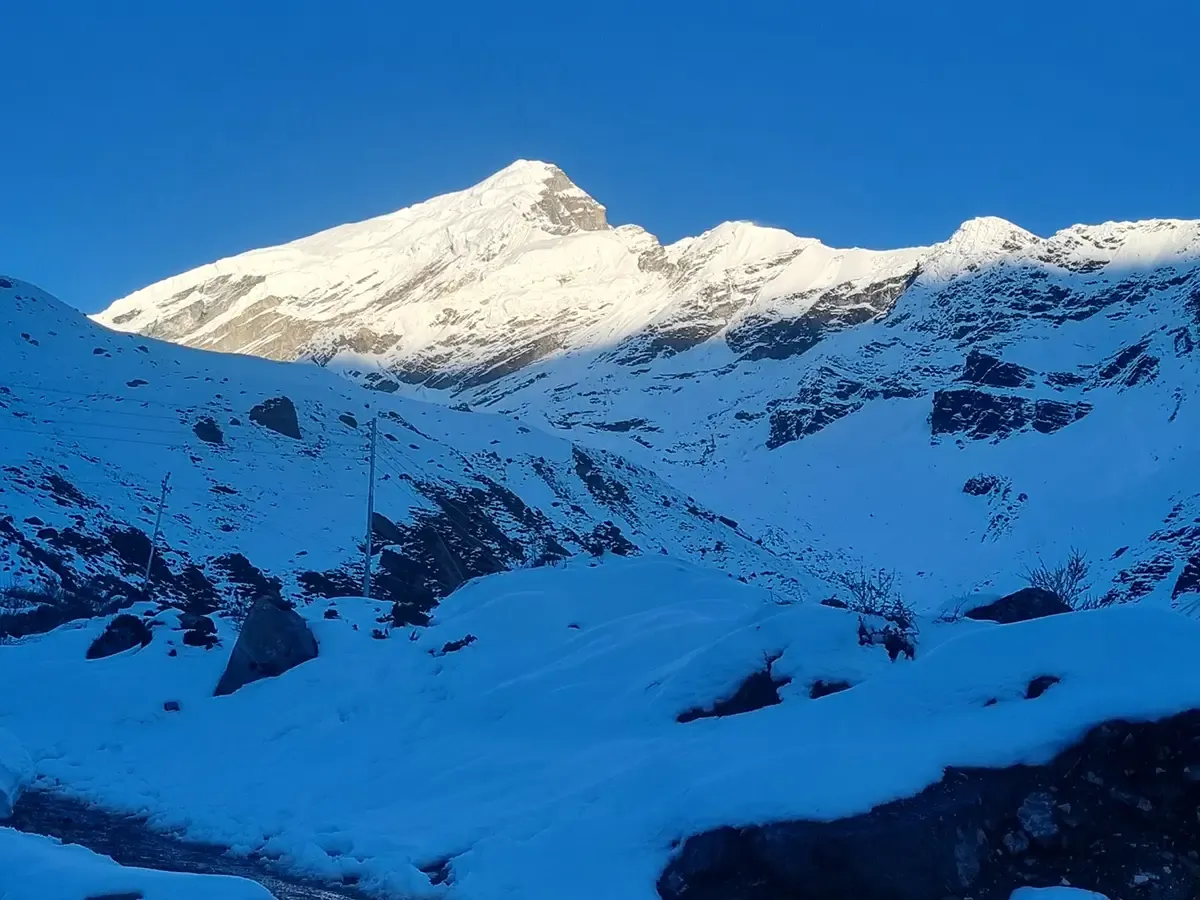
There are three summits of Chulu Peak- Chulu East (6,584 meters), Chulu West (6,419 meters), and Chulu Far East (6,059 meters). The peak is situated around seven kilometres north of Manang village in the Annapurna region in Nepal.

  • Chulu East (6,584 m)- Chulu East is a technically challenging climb with steeper terrain than the West and Far East peaks.
  • Chulu West (6,419 m)- Chulu West is technically easier than Chulu East and is good for beginner climbers.
  • Chulu Far East (6,059 m)- Chulu Far East is the easiest among all three Chulu Peaks in terms of technical challenges.

Chulu Far East Peak climbing history and route

Chulu Far East Peak was first summited in 1979 by Dick Isherwood & John Noble via the Northeast Ridge. The northeast ridge route is the standard climbing route to Chulu Far East Peak.

We make the Chulu Far East Peak Base Camp at 4,900 m (16,076 ft) and the Chulu Far East Peak High Camp at 5,600 m (18,372 ft). The average slope incline between the base camp and high camp is around 22 degrees.

The summit route from the high camp involves advanced glacier travel skills. You first have to reach the bottom of the summit ridge, which is around 45 degrees steep. From here, the average incline to the summit is below 30°.

Thorong La Pass crossing

After Chulu Far East Peak climbing, you will continue trekking towards Thorong La Pass. The trail goes through beautiful villages and alpine meadows and ascends to the top of the pass.

Crossing the Thorong La Pass will be the second challenge of this adventure. It will be a long hike to the top of the pass and then a downhill walk to Muktinath.

You will begin climbing before sunrises and cross the pass by mid-morning.

Mountain views during the Chulu Far East Peak climbing with Annapurna Circuit trek 18 days

The Chulu Far East Peak climbing with Annapurna Circuit trek is a great itinerary to witness some of the finest mountain vistas in the western Himalayan range in Nepal.

The view from Chulu Far East Peak summit and Thorong La Pass will be the most iconic. Apart from that, you will see diverse landscapes and mountain panoramas throughout the trek.

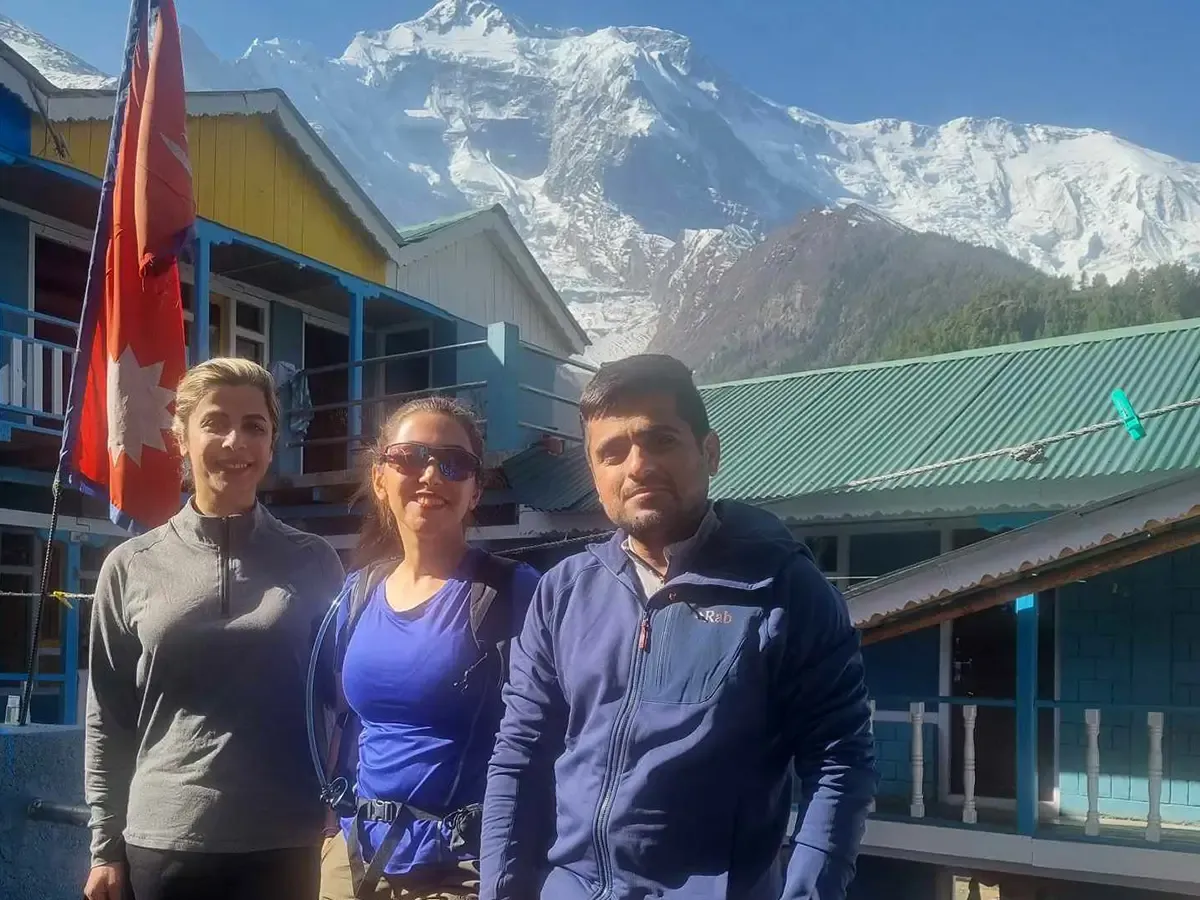
The Chulu Far East Peak climbing with Annapurna Circuit trek offers stunning views of mountains such as Annapurna, Dhaulagiri, Nilgiri, Tukuche Peaks, Hiunchuli, Gangapurna, Fishtail, Pisang Peak, Tilicho Peak, etc.

Is the Chulu Far East Peak climbing with Annapurna Circuit trek suitable for you?

  • To climb Chulu Far East Peak and complete Annapurna Circuit trek in one trip requires strong mental and physical fitness.
  • This trip is good for travelers who have strong trekking experience but are beginner climbers.
  • The Chulu Far East Peak climbing with Annapurna Circuit trek is also a long trip, so check your schedule and book accordingly.
  • If you are looking for an ultimate adventure in the Annapurna region and wish to climb a peak, this package is an excellent option.

Chulu Far East Peak climbing with Annapurna Circuit trek cost

The Chulu Far East Peak climbing with Annapurna Circuit trek cost USD XXXX per person. We have the best price for this combined trip in the market. You can also customize the package as per your budget.

Group sizePackage cost2026 booking
1USD XXXX per personClick here
2-4USD XXXX per personClick here
5-8USD XXXX per personClick here
8+USD XXXX per personClick here

Why climb Chulu Far East Peak with Mountain Life Treks?

Mountain Life Treks provides professional peak climbing and trekking services in Nepal. Our long legacy in the mountains of Nepal makes us a perfect, reliable travel partner for your adventures in the Himalayas.

We provide first-hand knowledge on Chulu Far East Peak. Our mountain leaders have climbed Chulu Far East Peak multiple times. So, they know how to safely move around this peak.

In addition to that, we provide excellent base camp and high camp services, comprehensive guidance from start to the end of the trip, and safety assurance.

We are welcoming both solo climbers and groups for the Chulu Far East Peak 2026. Our bookings are open for 2026 departures. If you have any questions regarding Chulu Far East Peak with Annapurna Circuit trek, feel free to talk with us anytime.

You will get the following benefits by doing the Chulu Far East Peak climbing with Annapurna Circuit trek 18 days with us:

  • 24/7 support and a dedicated team to assist you
  • Professional mountain leaders who have already summited Chulu Far East Peak
  • Friendly and reliable crew for base camp service
  • Best price and no hidden charges
  • 100% safety guarantee and departure
  • Comprehensive first aid kit with oximeter and oxygen cylinders for emergency
  • Climbing gear like down jackets, duffel bags, sleeping bags, etc, to use during the trip
  • Delicious menu for the climbing period
  • Full logistic support including permits
  • Flexible itinerary
  • Easy booking system

Chulu Far East Peak Climbing with Annapurna Circuit Trek Itinerary

Day 1

Arrival at the Tribhuvan International Airport (TIA) in Kathmandu and transfer to the hotel

We will pick you up from the airport on your arrival day and transfer you to the hotel. You do not have to haggle with the taxi or find your way to the hotel. Our team will be at the airport to assist you.

After some rest, meet us for a briefing. We will share the climbing plan. Then, you can buy trekking and climbing gear and call it a day.

Max Altitude: 1,400m (4,593ft)
Meals: Welcome dinner
Accommodation: Hotel
Day 2

Drive from Kathmandu to Dharapani via Besisahar

Get ready to leave your hotel on time. You will drive to Dharapani, the starting point of your adventure. The road is smooth till Dumre. From here, some sections till Besisahar are bumpy.

In Besisahar, you will change the vehicle to a compact mountain jeep. In around three hours of off-road driving from Besisahar, you will reach Dharapani. The best part about today is the breathtaking scenery and mountain vistas.

Max Altitude: 1,860m (6,102ft)
Duration: 8-9 hours
Distance: 234 km/145 miles
Meals: Breakfast, lunch, and dinner
Accommodation: Lodge
Day 3

Trek from Dharapani to Chame

You will start trekking from Dharapani. The trail goes through lush hills of rhododendron, oka, pine, and fir. You will trek following the Marsyangdi River and pass by small settlements like Danaqu, Timang, Khanchowk, and Koto. Likewise, enjoy stunning views of Nagadi Chuli, Annapurna II, and Mt. Manaslu on the way.

Max Altitude: 2,610m (8,562ft)
Duration: 6 hours
Distance: 15.5 km/9.6 miles
Meals: Breakfast, lunch & dinner
Accommodation: Teahouse
Day 4

Trek from Chame to Upper Pisang

The trail from Chame to Upper Pisang follows a steep, narrow uphill route. You will reach Paungda Danda Rock, a 1,500-meter-tall rock rising from the Marysangdi River.

From here, the trail descends to the Manang Valley Floor and slowly ascends to Upper Pisang via Bratang village on the way. Today, you will see lovely views of Pisang Peak, Chulu East, Annapurna II, Lamjung Himal, Tilicho Peak, etc.

Max Altitude: 3,115m (10,219ft)
Duration: 5-6 hours
Distance: 13.2 km/8.2 miles
Meals: Breakfast, lunch, and dinner
Accommodation: Lodge
Day 5

Trek from Upper Pisang to Ngawal

Leaving Upper Pisang, you will follow the upper trail via Gyaru and trek to Ngawal village. This is the most scenic trail. You can see breathtaking mountain views of Pisang Peak, Tilicho Peak, Chulu East, Annapurna II, and Annapurna III.

Max Altitude: 3,650m (11,975ft)
Duration: 5 hours
Distance: 8.4 km/5.2 miles
Meals: Breakfast, lunch, and dinner
Accommodation: Lodge
Day 6

Acclimatization day

An acclimatization break in Ngawal is great before the Chulu Far East Peak climb. You will become accustomed to high altitudes, which can help decrease the risk of altitude sickness during climbing.

Early in the morning, hike to a nearby ride to enjoy a gorgeous sunrise and spectacular mountain views. Then return to Ngawal village to spend the rest of the day.

Meals: Breakfast, lunch, and dinner
Accommodation: Lodge
Day 7

Trek from Nagwal to Yak Kharka

The trail gradually ascends to Yak Kharka. As you ascend, the vegetation becomes sparse, and the scenery transitions to an arid and alpine landscape. The trail passes through two valleys and reaches Yak Kharka.

Max Altitude: 4,050m (13,287ft)
Duration: 4-5 hours
Distance: 4.6 km/2.8 miles
Meals: Breakfast, lunch, and dinner
Accommodation: Lodge
Day 8

Climb to Chulu Far East Base Camp

Today, you will climb to Chulu Far East Base Camp. The trail climbs through sparse vegetation and alpine meadows. You will see outstanding mountain views on the way. The trail becomes steep and rocky as you get close to the base camp.

Max Altitude: 4,900m (16,076ft)
Duration: 4-5 hours
Meals: Breakfast, lunch, and dinner
Accommodation: Tent
Day 9

Climb to Chulu Far East High Camp

From the base camp, you will ascend to Chulu Far East High Camp. Climb the moraine and traverse the glacier debris to reach the high camp. Rest and later prepare for the summit push at the high camp.

Max Altitude: 5,600m (18,372ft)
Duration: 3-4 hours
Meals: Breakfast, lunch, and dinner
Accommodation: Tent
Day 10

Reach the top of Chulu Far East summit and descend to Yak Kharka

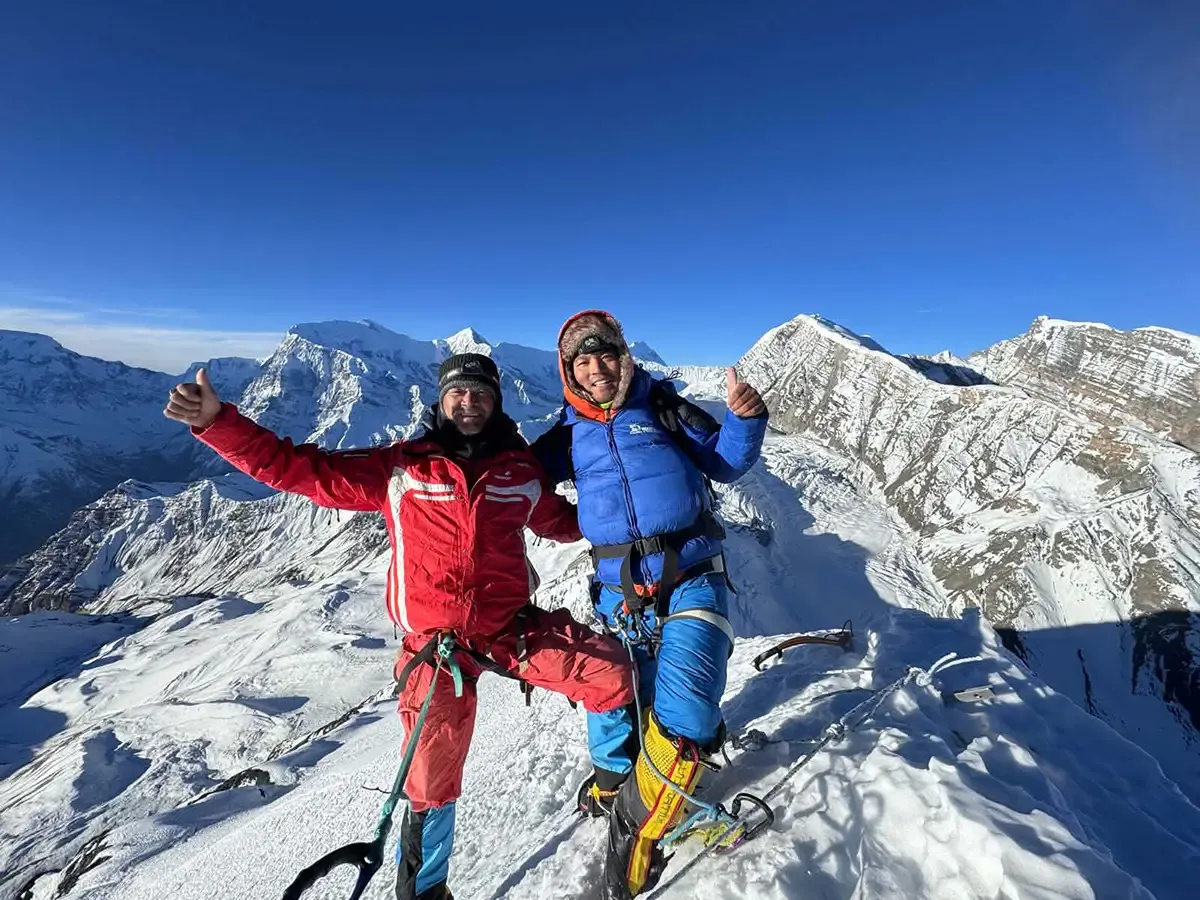
Today, you will reach the summit of Chulu Far East Peak. From the high camp, you will begin climbing around 1:00 AM.

Fighting with high altitude, cold climate, and thin air, you will follow the lead of your guide and climb towards the summit. The climbing route will be secured with the ropes where needed.

Upon reaching the summit, you will witness a surreal view of the mountains. After some time, descend to the base camp and pack your stuff. Then, descend to Yak Kharka to spend the night.

Max Altitude: 6,059m (19,878ft)
Duration: 9-10 hours
Meals: Breakfast, lunch, and dinner
Accommodation: Lodge
Day 11

Trek from Yak Kharka to Manang village

Following the same trail, slowly descend from Yak Kharka to Manang village. On the way, you will pass by alpine terraces and also explore Braga Monastery.

Max Altitude: 3,519m (11,545ft)
Duration: 4-5 hours
Meals: Breakfast, lunch, and dinner
Accommodation: Lodge
Day 12

Trek from Manang to Ledar via Yak Kharka (4,050 m/14,275 ft)

As you trek from Manang to Ledar, you will see a drastic shift in scenery. The trail becomes more rugged and steep. Crossing a stream, ascending to Tenki village.

From here, the trail leaves the Marsyangdi River Valley and enters the Jarsang Khola Valley. Soon you will reach Yak Kharka. Further, traversing alpine meadows, ascend to Ledar.

Max Altitude: 4,200m (13,779ft)
Duration: 5 hours
Distance: 9.1 km/5.6 miles
Meals: Breakfast, lunch, and dinner
Accommodation: Lodge
Day 13

Trek from Ledar to Thorang High Camp

From Ledar, you will be following a narrow, steep route and slowly ascending to Thorong Phedi. Most trekkers spend a night here before the final push to the Thorong La Pass. We will be hiking a little above to Thorong High Camp to spend the night.

High Camp has less service and is also quieter than Thorong Phedi. You can see beautiful views of Mt. Gangapurna, Annapurna II, and Annapurna III during trekking.

Max Altitude: 4,525m (14,845ft)
Duration: 4-5 hours
Distance: 7.3 km/4.5 miles
Meals: Breakfast, lunch, and dinner
Accommodation: Lodge
Day 14

Trek from High Camp to Muktinath (3,760 m/12,623 ft) via Thorong La Pass

Today, you will begin climbing before the sun rises. It will be a steep climb to the top of the Thorong La Pass. High altitude and thin air make climbing challenging, but the breathtaking mountain vista from the top of the pass will be very rewarding.

The trail then descends from the pass. Traverse rocky tracks and landslide debris on the way to Muktinath. Muktinath Temple is a pilgrimage site in Nepal for Hindus and Buddhists.

Max Altitude: 5,416m (17,769ft)
Duration: 8-9 hours
Distance: 15.6 km/9.6 miles
Meals: Breakfast, lunch, and dinner
Accommodation: Teahouse
Day 15

Trek from Muktinath to Jomsom via Lupra Village

Leaving Muktinath Temple, you will descend to Jomsom village. There are two routes. You will be following a less-used, offbeat route that goes via Lupra village.

In this village, you will see the BonPon religion. There is also a Bon monastery. The trail from here continues through the whitewashed houses and narrow alleys of Kagbeni and descends to Jomsom.

You can see stunning views of Thorong Peak, Dhaulagiri, Tukuche Peak, Nilgiri, etc while trekking.

Max Altitude: 2,743m (8,999ft)
Duration: 6 hours
Distance: 23 km/14 miles
Meals: Breakfast, lunch, and dinner
Accommodation: Lodge
Day 16

Fly from Jomsom to Pokhara

On this day, you will take a short flight from Jomsom to Pokhara. The flight will offer outstanding aerial views of the Himalayan mountains. Our team will drop you at the hotel upon landing in Pokhara.

You have the remaining day free in this beautiful city. Rest and later explore the bustling streets of Lakeside. Then spend some time enjoying the tranquility of the Phewa Lake.

Max Altitude: 822m (2,696ft)
Duration: 25 minutes
Meals: Breakfast only
Accommodation: Hotel
Day 17

Drive from Pokhara to Kathmandu

You will leave Pokhara early in the morning. It will be a scenic ride from Pokhara to Kathmandu. The road goes along lush hills and rivers. Settle in the hotel upon reaching Kathmandu. You will arrive by mid-afternoon.

The rest of the day is free. Relax and later visit tourist sites around you. As it is your last day in Kathmandu, buy souvenirs and enjoy your time in the city.

Max Altitude: 1,400m (4,593ft)
Duration: 6-7 hours
Distance: 205 km/127 miles
Meals: Breakfast only
Accommodation: Hotel
Day 18

Final departure

You will return to your home on this day. Our representatives will drop you off at the international airport in a private vehicle.

Meals: Breakfast only
Still Confused?
No worries - our team is ready to guide you every step of the way.

Altitude Chart

Cost Details

Includes

  • Airport pick-ups and drop-offs by private four-wheeler
  • Comfortable land transportation from Kathmandu to Dharapani and from Pokhara to Kathmandu
  • A flight from Jomsom to Pokhara
  • 2 nights in a 3-star hotel in Kathmandu (twin-sharing accommodation)
  • 1 night in a 3-star hotel in Pokhara (twin-sharing accommodation)
  • 12 nights lodge accommodation during the trek
  • 2 nights in a tent during climbing
  • Only breakfast in Kathmandu and Pokhara as per the itinerary
  • Three meals (breakfast, lunch, and dinner with tea/coffee and seasonal fruit) a day during the trek and climbing
  • Climbing equipment such as climbing rope, ice screws, and snow bars
  • Camping equipment such as tents, mattresses, tables, chairs, fuel, etc
  • Licensed Nepali guide (NMA certified) and porter (one porter for one climber)
  • Assistant guide for groups of 5 or more people
  • Assistant porters for base camp support
  • Accommodation, food, allowance, and high altitude insurance for the guide and porter
  • Chulu Far East climbing permit
  • Annapurna Conservation Area Project (ACAP) permit
  • TIMS Card
  • Garbage deposit
  • Down jacket, trekking poles, and a four-season sleeping bag to use during the trek
  • Exclusive first-aid kit, including an oximeter and oxygen cylinders for emergency use
  • Helicopter evacuation arrangement (expenses should be covered in your travel insurance)
  • Trip achievement certificate
  • All government taxes and service charges

Excludes

  • Nepal travel visa fee (USD 30 for 15 days, USD 50 for 30 days, and USD 125 for 90 days)
  • International flight to/from Kathmandu
  • Travel insurance (must cover helicopter evacuation and medical bills)
  • Lunch and dinner in Kathmandu and Pokhara
  • Trekking/climbing clothes and gear
  • Shopping and souvenirs
  • Summit bonus for guide and porters (mandatory)
  • Bar bills, water bottles, and other beverages
  • Personal expenses during the trek (like WiFi, charging, and hot showers)
  • Departure taxes
  • Any expenses not mentioned in the cost include section

Note: If you return earlier from the mountain due to sickness or any other issue, the money for unused service is nonrefundable. In addition to that, you have to bear any additional expenses such as transportation, accommodation, and meals in Kathmandu and Pokhara. 

Chulu Far East Peak Climbing with Annapurna Circuit Trek Equipment Lists

Follow the list below to pack for the Chulu Far East Peak climbing with Annapurna Circuit trek:

Head
Head
  • Sun Cap
  • Wool/Fleece Hat
  • Balaclava
  • Neck Gaiter/High Neck
Hands
Hands
  • Lightweight Synthetic Liner Glove
  • Wind Stopper Fleece Gloves
  • Heavy Gloves (Mitten)
Upper Body
Upper Body
  • Short-Sleeved Shirts/T-shirts
  • Lightweight Top/Thermo Coat
  • Midweight Top
  • Synthetic or Fleece Jacket
  • Down Insulated Jacket
  • Gore-Tex Jacket
Lower Body
Lower Body
  • Underwear
  • Lightweight Long Underpants
  • Midweight Long Underpants
  • Trekking Pants
  • Synthetic Insulated Pants
  • Gore-Tex Pants
  • Trekking & Climbing Socks
  • Summit Socks
Toiletries
Toiletries
  • Hand Sanitizers & Hand wash
  • Wet Tissues
  • Toothpaste
  • Toothbrush
  • Bath Soap
  • Shampoo
  • Moisturizers
  • Laundry Soap
  • Garbage Bag
Travel Documents
Travel Documents
  • Valid Passport
  • Valid Visa
  • 4 PP Size Photo
  • Insurance Paper (Medical & Rescue) & Contact Address
  • Family/Company Contact Number & Address
  • Credit Card
Climbing Equipment
Climbing Equipment
  • Climbing Helmet
  • Headlamp with Spare Batteries (Petzl/BD)
  • Ice Axe Semi-technical
  • Harness
  • Carabiners (Both Lock & Unlock)
  • Ascenders/Jumar
  • Belay Device (ATC Guide/Figure of 8)
  • Assistant Rope
  • Tape Sling
  • Ice Screw
  • Summit Boot/G2SM
  • Crampons
  • 1 Sleeping Bag: -30 +C to -40 +C
  • Thermarest Cell Foam Mattress
  • Sun/Glacier Glasses UV Protection
  • Snow Goggle UV Protection
  • Extendable Trekking Poles (BD Alpine Flz)
Medical / First Aid
Medical / First Aid
  • Sunscreen (SPF 50+++)
  • Lips Guard (with SPF)
  • Water Purification Tablets
  • Baby Wipes or Wet Towels
  • Handy Plaster
  • Crack Bandage
  • Tincture
  • Lodine
  • Strepsils
  • Antibiotic
  • Paracetamol
  • Aspirin
  • Sinex
  • Anti-Diarrhea Capsule/Eldoper
  • Brufen/Ibuprofens
  • Diamox
  • Eye Drops
  • Zip-Lock Bags
Miscellaneous
Miscellaneous
  • Swiss Knife
  • Sandals
  • Lightweight Hiking/Trekking Boots
  • Camp Booties
  • Rucksacks (45 - 55 Ltr.)
  • 1 Duffel Bag
  • Water Bottles
  • Thermos/Flask
  • Pee Bottle
  • Pack Towel
  • Umbrella/Rain Coat
  • Spare batteries
  • Waterproof Stuff Sacks
  • Satellite Phone (if possible)
  • Solar chargeable power bank (optional)
  • Journal/Pen
  • Book/Board Game
  • Bars & Snacks

Essential Information

Chulu Far East Peak climbing with Annapurna Circuit trek difficulty

Chulu Far East Peak climbing with Annapurna Circuit trek is very strenuous. It is only recommended for individuals who have previous trekking experiences and are fit.

Climbing Chulu Far East Peak involves scrambling and glacier traverse. The technical aspects are low, but high altitude, fairly exposed ridges, snow and ice climbing, extreme cold, and high sun exposures make the overall climb physcially and mentally demanding.

Likewise, crossing Thorong La Pass is also quite challenging. Every day, you will gain elevation and experience varying climates. Likewise, you have to adjust to simple accommodations and limited food options.

In short, the demands are quite high, so you have to be physically and mentally strong and possess previous high-altitude trekking experience.

High altitude management

You ascend above 6,000 meters on the Chulu Far East Peak climbing with Annapurna Circuit trek. To avoid high altitude sickness, we ascend slowly and take acclimatization break.

It is important to identify altitude sickness symptoms on time to address them and continue the journey without any disruptions. So, our team will monitor your health and blood sugar level actively.

Follow the preventive measures below to avoid altitude sickness:

  • Ascend slowly
  • Maintain your pace
  • Keep yourself hydrated
  • Listen to your body
  • Take frequent short breaks to rest
  • Get ample sleep
  • Eat carbohydrate-rich food
  • Be aware of early signs of altitude sickness, such as headache, insomnia, nausea, dizziness, vomiting, difficulty in breathing, and loss of appetite.

Best time to do the Chulu Far East Peak climbing with Annapurna Circuit trek

Mountains are climbed in the Himalayas in the spring (March to May) and autumn (September to November) seasons. These are peak climbing seasons in Nepal.

The weather is stable in these seasons, and multiple summit windows are available throughout the season.

You will enjoy stunning mountain vistas and a pleasant climate, which is great for high-altitude walking. The trail conditions and mountains are also in great shape for climbing.

Accommodation

In Kathmandu and Pokhara, you will stay at 3-star hotels. Rooms will be twin-shared.

During trekking, you will spend nights in teahouses in the villages along the trail. Rooms will be twin shared. Teahouses offer simple accommodation and common washrooms.

During peak climbing, you will spend nights in alpine tents. We provide separate tents for kitchen, dining, sleeping, and bathroom.

Food

Our Chulu Far East Peak climbing with Annapurna Circuit trek package includes only breakfast in Kathmandu and Pokhara. You can have lunch and dinner as per your wish.

During trekking, you will get three meals a day in our package cost. The meals will be provided as per the menu of the teahouses. Dal bhat, noodles, thukpa, momo, fried rice, stew, porridge, pan cakes, curry, and Tibetan bread are some common dishes.

While climbing, we cook meals. Our team will handle the kitchen and prepare delicious and high-energy meals for you.

Travel insurance

Travel insurance is a must for Chulu Far East Peak climbing with Annapurna Circuit trek. It mandatorily covers helicopter evacuation up to 6,100 meters and medical bills.

Without travel insurance with the necessary coverage, you will not be allowed to join the trip. So, make sure to check your insurnace policy and ensure it is effective for adventurers in the Himalayas in Nepal.

Communication during the trip

During the trek, mobile network and WiFi will be available in many villages till Manang. After Manang village, the network becomes unreliable.

We stay connected with the group via satellite phone. Likewise, while climbing, the base camp crew and climbing party will stay in touch via walkie-talkies.

Other services

  • Charging: Carry a solar charger and spare batteries for backup. You can charge your mobile and camera in the teahouses during trekking. It will cost you a few extra bucks.
  • Hot showers: It is also a paid service in teahouses. You can expect to pay NRP 500 to NRP 700 per shpwer. Pack wet tissues for backup. Note that taking regular showers in the Himalayas is not recommended. It can lead to hyperthermia.
  • ATM: There is no ATM on the Annapuran Circuit route. So, withdraw ample money in Kathmandu to use during the trek. You will need some money for personal expenses like charging, hot shower, WiFi, satellite calls, etc.
  • Tips: You are supposed to tip your guide and porters after the trip. 20% to 25% of the package cost is recommended. You can tip more if your heart desires.

Nepal travel visa fee

A Nepal travel visa is easily available at Tribhuvan International Airport for travelers from many countries. This is called an on-arrival travel visa. Check your country's eligibility on the official site of Nepal immigration.

To expedite the visa processing, fill out the form online and keep the necessary documents and visa in USD on hand. You can also obtain the travel visa from the Nepalese Embassy in your country before arriving in Kathmandu.

Chulu Far East Peak Climbing with Annapurna Circuit Trek FAQs

Q1. Where is Chulu Far East Peak located?

The Chulu Far East Peak is located in the northern part of the Annapurna region in the Manang district of Nepal. The peak is situated just above the Annapurna Circuit trail.

Q2. How difficult is the Chulu Far East Peak climb?

Chulu Far East is a trekking peak in Nepal. It is not extremely technically challenging like 7,000-meter or 8,000-meter mountains.

However, the peak demands strong physical fitness, mental resilience, basic mountaineering skills, and the ability to handle high altitude.

Q3. Do I need prior mountaineering experience for Chulu Far East?

Prior mountaineering experience is not mandatory for Chulu Far East Peak climbing, but it is highly recommended. The Chulu Far East Peak is great for first-time climbers. You can get experience on this peak before heading for bigger trekking peaks and mountains.

Q4. How long does the Chulu Far East Peak climbing with Annapurna Circuit trek take?

The Chulu Far East Peak climbing with Annapurna Circuit trek is a 18 days trip. As the peak is situated above the Annapurna Circuit trail, you will start the trek as per usual from Dharapani.

Trek to Yak Kharka and hike to Chulu Far East Peak Base Camp. Climb the peak and continue with the rest of the trek that includes the crossing of Thorong La Pass.

Q5. What is the maximum altitude reached during this trip?

The maximum altitude you will reach during this trip is 6,059 meters (19,878 ft). It is the summit of Chulu Far East Peak. Trekkers also cross Thorong La Pass at 5,416 meters (17,769 ft), which is the second-highest point.

Q6. Is Chulu Far East suitable for beginners?

Beginner climbers can approach Chulu Far East Peak. However, they must have a strong trekking background. Strong physical fitness and mental strength are necessary to climb Chulu Far East Peak.

Q7. What level of fitness is required for this trek and climb?

You need to be extremely fit for the Chulu Far East Peak climbing with Annapurna Circuit trek. You should be able to walk 6 to 7 hours daily on rugged terrain.

The terrain is not flat. You will ascend and descend throughout the way, which demands endurance. Likewise, climbing a mountain is not an easy feat either.

High altitude, thin air, low oxygen level, cold weather, and high exposure to the sun will further push you to your limits. The technical difficulties are low on the Chulu Far East Peak, and our expert Sherpa team will help you navigate it.

Q8. How technical is the Chulu Far East Peak climb?

Among the three Chulu Peaks, the Chulu Far East Peak is the least technical one. As per the Himalayan standards, the Chulu Far East Peak difficulty is classified as Alpine PD+.

This suggests the peak is physically very demanding but technically not. Climbers must use crampons, an ice axe, and move on fixed ropes.

Q9. Do I need to know how to use crampons and ice axes?

It is best to have basic climbing skills. You can watch YouTube videos or join a climbing club in your city.

We will provide basic climbing training during acclimatization in Ngawal village or at the Chulu Far East Peak Base Camp. You will learn to use climbing gear and climbing techniques.

Q10. How challenging is crossing Thorong La Pass?

Crossing the Thorong La Pass on the Annapurna Circuit route is the biggest challenge. But crossing this pass after climbing Chulu Far East Peak will be a piece of cake for you. Nevertheless, it includes almost 8 to 9 hours of walking, steep climbing, and high altitude, so challenges are there.

Q11. What permits are required for Chulu Far East Peak climbing?

For the Chulu Far East Peak climbing with Annapurna Circuit trek, you will need the following permits:

  • Chulu Far East Peak climbing permit issued by NMA (Nepal Mountaineering Association)
  • Annapurna Conservation Area Permit
  • TIMS Card
Q12. How is the acclimatization managed?

We ascend slowly and take an acclimatization break in Nagwal village before climbing to Chulu Far East Peak Base Camp. From base camp, you will ascend to high camp and push from here to the Chulu Far East Peak summit.

Q13. Is there a rest day before the summit attempt?

You spend a night at Chulu Far East Peak High Camp before the summit push. This stop allows you to rest, replenish, and recover before the final summit push.

Q14. What happens if the weather delays the summit attempt?

In the spring and autumn seasons, there is a rare chance of weather disrupting the summit push. If it happens, we monitor the weather and wait for it to get better.

The worst-case scenario is that we return without a summit push. But before that, we wait, extend the trip if the client is okay, or shorten the Annapurna Circuit trek and use those days and resources while waiting for the weather to clear at Chulu Far East Peak Base Camp.

Q15. What type of accommodation is available at Chulu Far East Base Camp and Chulu Far East Peak High Camp?

At the Chulu Far East Peak Base Camp and Chulu Far East Peak High Camp, you will stay in alpine tents. Our crew set up the tents. The base camp will have separate sleeping, dining, kitchen, and washroom tents. At the high camp, we build only sleeping tents.

Q16. Is climbing gear included in the package cost?

The Chulu Far East Peak climbing package does not include climbing gear. Mountain Life Treks offers duffel bags, sleeping bags, walking poles, and down jackets to use during the journey.

You have to return them after the trip ends. If you do not want to invest heavily in climbing gear, we can help you rent it in Kathmandu at a very affordable price.

Q17. Is there an emergency evacuation available?

Yes, emergency evacuation is available on Chulu Far East Peak. Your travel insurance must cover evacuation expenses. We can also arrange a helicopter evacuation from any point along the Annapurna Circuit trail.

Q18. Are oxygen cylinders carried during the climb?

Climbers do not need to use oxygen cylinders on peaks like Chulu Far East. Still, for emergencies, we carry a couple of oxygen cylinders.

Q19. What is the best time to climb Chulu Far East Peak?

The best time to climb Chulu Far East Peak is from March to May and September to November. These months are the peak time for climbing in the Himalayas because the weather remains stable, the climbing route is sturdy, and there is less risk of avalanches.

Q20. Is there mobile network coverage on the Annapurna Circuit?

The mobile network is only available in some villages on the Annapurna Circuit trek route. After Manang village, there is no network at all till Muktinath.

Q21. Can I customize the Chulu Far East Peak climbing itinerary?

Yes, you can customize the Chulu Far East Peak climbing itinerary. We can add an excursion to other destinations in the Annapurna region to your itinerary.

If you are on a short holiday, we can make the trip shorter by removing the Thorong La Pass crossing from the itinerary. Similarly, you can also make changes in services during the trip.